
Director Christian Rojas discusses his debut feature, which follows an Indigenous girl from the Andes struggling with her gender identity in a conservative community
Paris-based MMM Film Sales has acquired international rights to Ecuadorian filmmaker Christian Rojas’ debut feature “Princess” (“Ñusta”) ahead of its world premiere at the Tallinn Black Nights Film Festival (PÖFF).
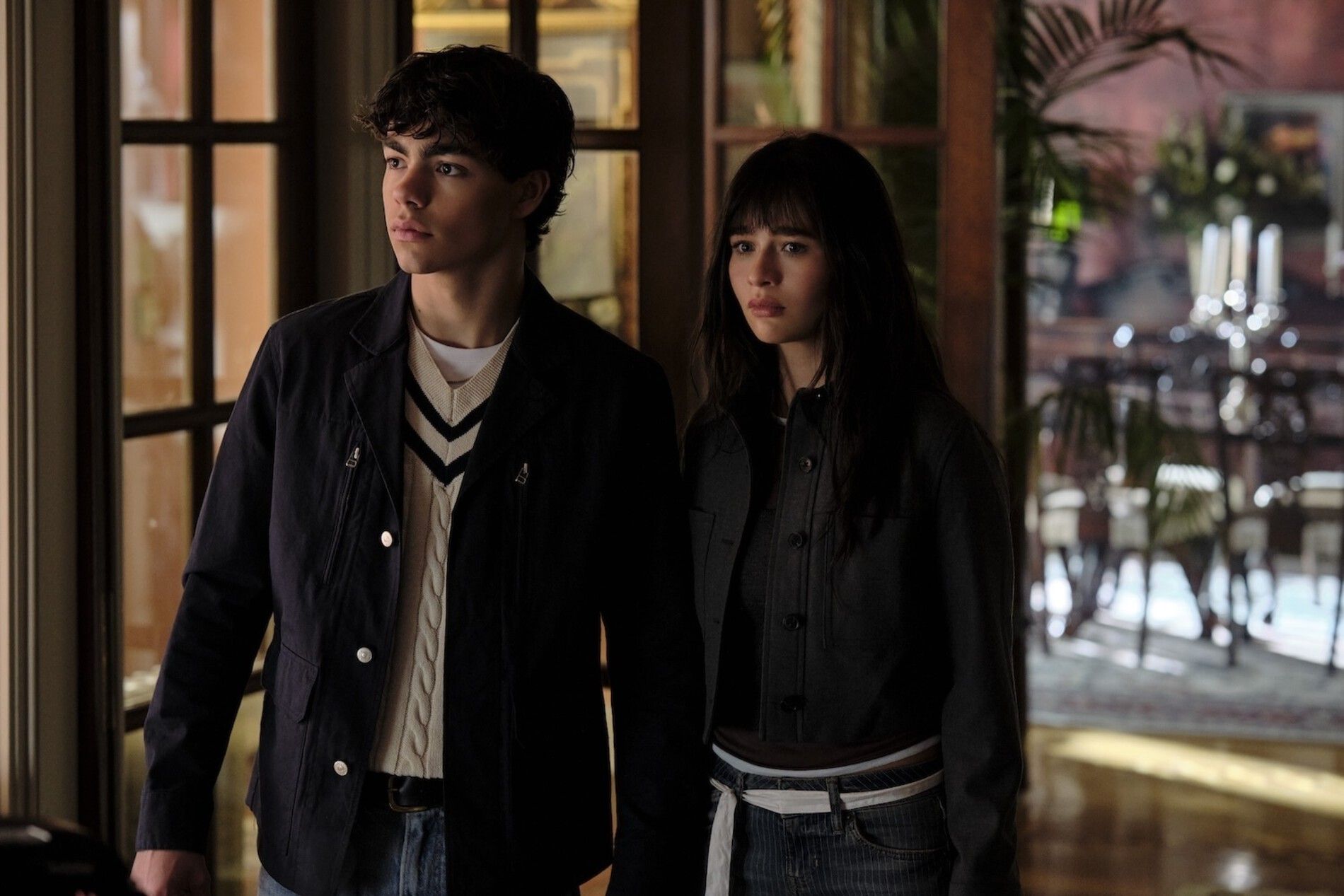
“Princess,” which screens in the fest’s First Feature Competition, follows Kallpa, a 12-year-old Indigenous girl from the Andes as she prepares for her community’s festivities, where the ñusta — or princess — is chosen each year. Kallpa dreams of participating but faces a reality: She was born in a boy’s body.
The story explores her search for identity and her gender transition, which are deeply intertwined with her Indigenous roots, her community, and the Andean worldview.
The film’s “sensory, singular approach to storytelling floored us from the first frames,” says Matthias Angoulvant of MMM Film Sales. “Through the eyes and body of an Indigenous child fighting to exist beyond the identity and role imposed on them, the film renders an intimate pain with extraordinary restraint. A bold, deeply moving queer debut, it embodies the daring cinema we champion at MMM.”
“Princess” is produced by Ecuador’s Epopeya and Oso Rojo Films in co-production with Agua Florida (Peru); Hain Cine (Argentina); Woo Films (Mexico); and Chao Pescao (Bolivia).
“For us, more than a business deal, partnering with MMM Film Sales was a meeting of perspectives,” said producer María de los Angeles Palacios of Epopeya. “‘Ñusta’ is a delicate film; it speaks from a place of intimacy, from the body and from a memory that has been silenced.”
She added: “A film like this can’t be taken to market just any way. What makes the difference is that the MMM team understands its gaze and, drawing on their experience, knows how to move it through the international market without stripping away its sensitivity. For a debut feature, having that kind of support matters as much as the visibility itself.
“We always believed the film would find the perfect place to be seen for the first time, and if we’re honest, Tallinn was the one we were hoping for. This year the festival turns 30: It was born in 1997, the same year in which ‘Ñusta’ is set. That coincidence holds a very special meaning for us. That a film shot in the Austro, in Ecuador’s southern Andes, is having its world premiere in Estonia, on the other side of the world, feels both deeply beautiful and paradoxical.”
Palacios noted that international interest in Indigenous stories has been growing for years, “and we welcome it. What we hope is that it keeps opening up to how diverse Indigenous peoples and their stories truly are, each with its own language, territory and struggles, and with voices that haven’t always had a space.
“‘Ñusta’ doesn’t try to represent all Indigenous peoples; rather, it draws close to the intimate story of an Andean girl searching for her place in the world. The film was also built through dialogue and a bond with the community that welcomed us. For me, the value of cinema lies precisely in that possibility of approaching other realities with sensitivity, respect and openness, recognizing that there is no single way to tell a story, or to live one.”
Indeed, director Rojas stressed the great diversity of Indigenous societies in Ecuador: “It’s important to point out that this film is not about one particular community. In Ecuador there are more than 18 Indigenous peoples and 14 Indigenous nationalities, and they are very diverse. Indigeneity is not one single thing; it is heterogeneous, and this film takes place in the Andes but not in any specific community.
“The process with the community of Sid Sid Anejo, in Cañar, which was our filming location, was fundamental to ‘Ñusta.’ From the start, we wanted to reach out, share the story and listen to them, because it was important to me that the film not arrive in the territory as something foreign, but that it could also be built through the encounter with its people. The most beautiful thing was feeling how they received the story, with so much affection, generosity and openness.”
Rojas recalled how, after sharing the story with the community, one of the responses was: “These stories happen, but we don’t talk about them.”
“So they decided to give their support. Their involvement went far beyond being in front of the camera: they also got involved behind it and were an active part of building the film as members of the crew,” he added. “Their presence, their trust and the way they accompanied us gave ‘Ñusta’ something that wasn’t only in the script: a life of its own, also born from that encounter. That fills me with immense gratitude.
“I believe cinema also has a responsibility to return to the places and the people who made it possible. That’s why it’s very important to us that, when we release ‘Ñusta’ in Ecuador, we can go back to Sid Sid Anejo and share the film with the community. Not only as a way of thanking them, but because they are also part of this story. It moves me to think that we’ll be able to come together again and watch the film together, in the place where part of it came to life.”
In the film, young KaIlpa embraces her Indigenous identity even as she faces rejection by residents of her village — something that was important for Rojas to portray. “We shouldn’t have to give up one part of who we are in order to live another. Our identity is made of many things: our bodies, the color of our skin, our roots, our desires and the people we love. And all those parts deserve to exist together, without having to ask permission.
“I also wanted to contribute to a more diverse queer representation, one that moves away from stereotypes and recognizes that our experiences are different, that there isn’t just one way of being queer. Indigenous peoples and communities aren’t homogeneous realities either; within them there are voices, struggles and processes of transformation that are opening new paths.”
Rojas pointed to Chawpi Runakuna, Ecuador’s first Indigenous LGBTQ collective, which represents several communities in the country. Among its prominent members is Ninari Chimba, an Indigenous lesbian activist who is also part of the film’s cast. “For me, her voice and her struggle are essential, because they remind us that these realities have always existed, even if they often haven’t had a space in which to be expressed,” the director added.
Rojas hoped the film can contribute to greater understanding and acceptance among the more conservative sectors of Ecuadorian society.
“I’d like ‘Ñusta’ to reach those homes too, and those people who still find it hard to understand sexual dissidence. Not through confrontation, but through sensitivity, through encounter and through the possibility of listening to one another.
“I don’t expect everyone who sees the film to think the way I do, but I would like them to be able to get close to Kallpa, get to know her and connect with her story beyond their own beliefs,” Rojas added.
“It moves me to think that the film could open a conversation within a family, that someone might find the courage to listen to their daughter, their son or someone close to them whom they couldn’t understand before. … If the film manages to awaken that sensitivity, even in a single person, I’ll feel that this whole journey has been worth it.”
In making the film, Rojas sought to tell a story not only “about rejection and violence, but also about tenderness, desire, the body, love and the possibility of being free. For me, ‘Ñusta’ isn’t only about what a society can do to a person when it rejects their identity. It’s also about what happens when we find someone who looks at us with love, when we can inhabit our bodies without fear, and when we discover that there is a place in the world where we can be who we are.”
Finding the right actor for the part was essential and Rojas succeeded with the casting of the film’s young lead.
“Finding Kuri Fuerez was a marvel. Together with our casting director, Nicolás Yacelga, we met many kids and explored different possibilities for Kallpa, but in Kuri I found something very special. He has an extraordinary sensitivity and understanding of the character, as well as tremendous professionalism. What finally convinced me was his ability to understand the story from a very intimate place, to express so many emotions without needing words, simply through a look.
“Kuri didn’t just play Kallpa: He managed to approach her with a tenderness and an honesty that moved me deeply. There was something very genuine in the way he inhabited the character, a way of understanding her silences, her desires and her contradictions without judging her. For me, that’s what made him the right person. Beyond his immense talent, Kuri was able to look at Kallpa with extraordinary affection, and I feel that this sensitivity is one of the most beautiful things living inside the film.”
Set in 1997, the film also highlights a pivotal moment for Ecuador’s queer community.
“In Cuenca, a conservative city in the Austro, Ecuador’s southern Andean region, the police raided a trans beauty pageant being held at the Abanicos bar and arrested several people. That episode, known as ‘The Night of the Abanicos,’ left a deep wound in our community’s memory and became a symbol of the persecution and violence that LGBTIQ+ people lived through in my country. That same year, the struggle began.”