The neo-Western TV genre is on the rise, with shows like Justified, Fallout, and Firefly proving that an undeniably Western sentiment can dominate shows set in the present day, the apocalypse, and outer space. Today, the Western genre on television is defined less by a rigid historical time period and more by themes of lawlessness and opportunity couched in wide-open spaces.
Contemporary Neo-Western TV shows have come to merge these undeniably Western elements with increasingly unpredictable genres, like technology-forward sci-fi (Westworld), space epics (The Mandalorian), and time travel mystery (Outer Range).
As the definition of a "Western" has expanded, the shows that fit the bill have grown more and more bizarre, pushing the boundaries not only of the Western genre, but of television as a whole.
One such trailblazing show was Preacher, AMC's adaptation of the DC comic series of the same name. When Preacher premiered a decade ago, neo-Westerns were relatively few and far between, putting this unprecedented series in a category by itself.
Indeed, the series, about a criminal-turned-preacher endowed with an ability that rivaled that of God himself, was so thematically and visually risqué that it remains one of the most daring TV shows both in the Western genre and beyond.
The show wore a lot of hats, but at its core, Preacher was an undeniable Western. The trio of preacher Jesse Custer, his love interest Tulip, and vampire best friend Cassidy took to the open road both to pursue the missing God and flee the fearsome Saint of Killers.
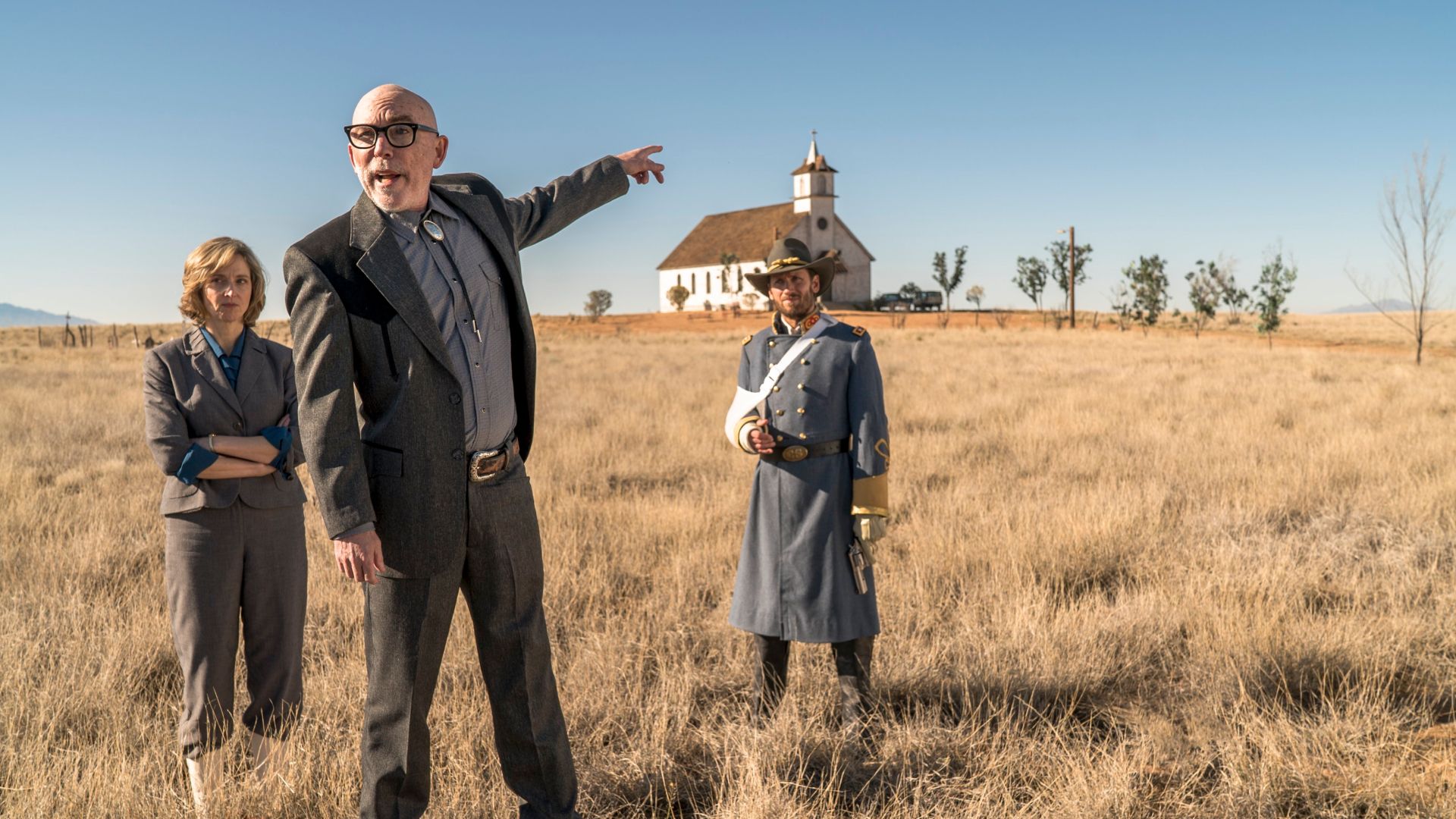
The dusty landscape, Jesse's constantly-donned preacher collar, and the Saint of Killers' supernatural cowboy aesthetic all immediately brought the Wild West to mind, while the absence of God created a global, philosophical sense of lawlessness that utilized the common Western theme in a new way.
As it explored the ramifications of God's inexplicable absence, Preacher turned not only Earth, but also Heaven and Hell into the Wild West. Each setting became a place where there were no rules, freedom and danger existed in equal doses, and leadership was open for the taking.
Yet even as the show's scope widened to address the entire world and both planes of the afterlife, the story remained intimate and grounded in one man's search for God, a description that would fit many a Western, albeit much less literally. Through Jesse's sheer force of will, Preacher offered an actual explanation to the eternal question of why so many prayers go unanswered.
With the tragically comic figures of Eugene Root and Herr Starr, not one, but two of Preacher's main characters had experiences that rendered their faces visually evocative of genitalia. To arrive at this level of disfigurement, Preacher also committed to detailing some of the most gratuitous violence ever seen on TV. Visually, nothing was off limits.
The same was true thematically. The premise of a God who was not only absent but ambivalent, and a human who had the means not only to challenge Him but to beat Him, was already rather sacrilegious. Yet the show took its embrace of religious taboo even further with the introduction of the Grail, an ancient secret organization that has spent centuries preserving the pure bloodline of Jesus Christ.
The Preacher series finale, "End of the World", concludes Jesse and God's story, and definitely changes the comic book ending for the better.
The operation involved generations upon generations of inbreeding, which led to a modern Messiah who had a host of genetic disorders and was referred to as Humperdoo. The show's engagement with taboo figures even went beyond religious icons, as it featured Hitler as a major, comedic, sometimes even sympathetic character.
In everything from its philosophical musings to its graphic fight scenes, Preacher was not only a standout Western, but one of the bravest shows put on TV.