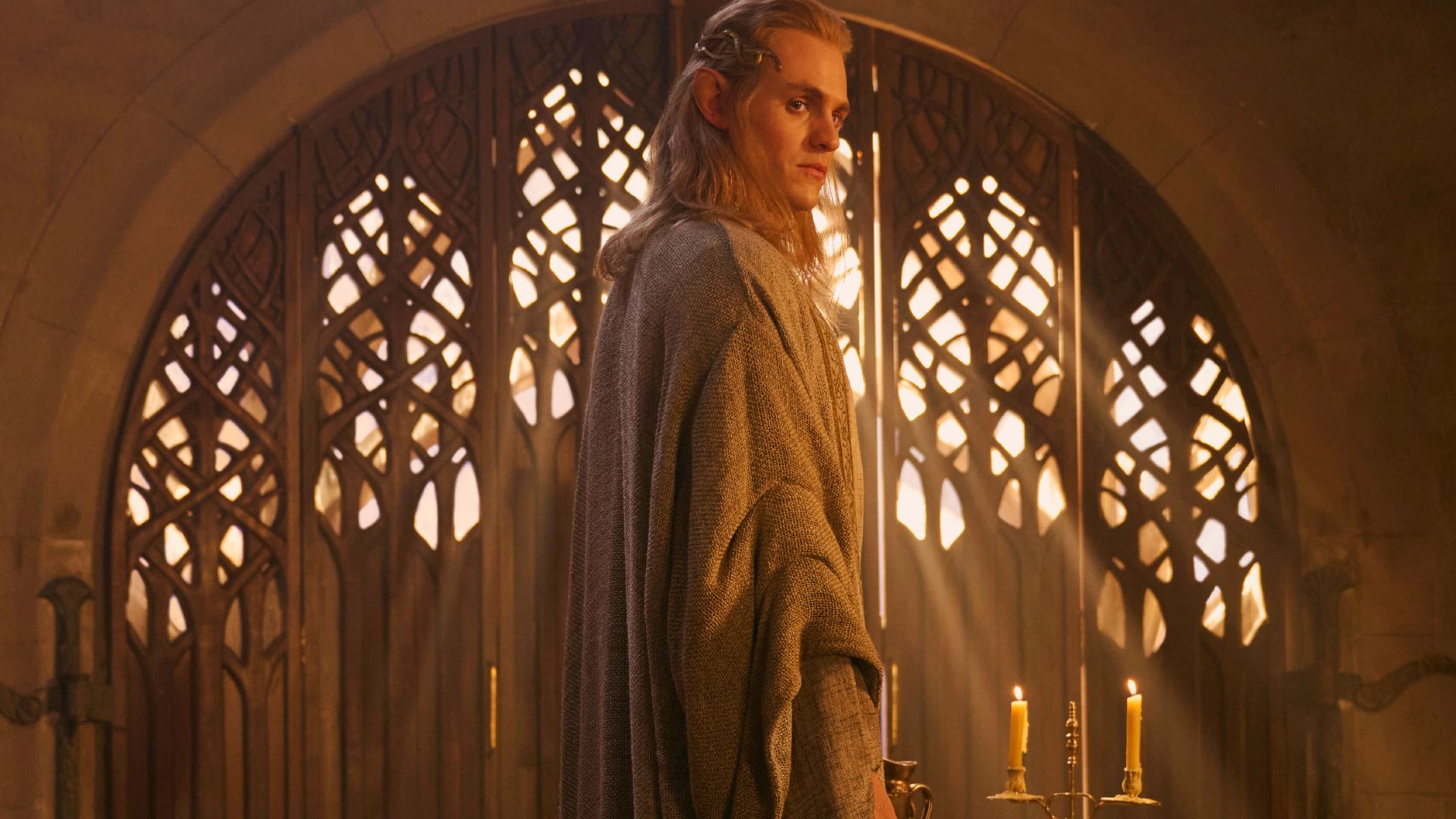
The Lord of the Rings: The Rings of Power introduces Sauron's fair form, Annatar. One of the most famous fictional villains of all time, he may be, but Sauron's physical appearance has always remained somewhat ambiguous. J.R.R. Tolkien describes Sauron in only the vaguest possible terms, and the popularized images of a towering warrior in black armor or a flaming eye atop Barad-dûr come mostly from Peter Jackson's The Lord of the Rings movie trilogy.
Tolkien gets a little more descriptive about Sauron's appearance in Middle-earth's Second Age, which provides the setting for Amazon's The Rings of Power TV series. In canon, Sauron is licking his wounds following Morgoth's defeat. Upon finally reappearing, he takes the disguise of "Annatar," which Tolkien labels a "fair form" without ever really offering firm details. As Annatar plays a major role in The Rings of Power season 2, here's everything Middle-earth mythology reveals about Sauron's favorite face.
Though best known for his work in the field of warmongering, Sauron began as one of the Maiar - primordial, angel-adjacent, immortal spirits created as servants to the God of Tolkien's world, Eru Ilúvatar. Sauron would be corrupted by Melkor (later known as Morgoth), who was a higher-ranking spirit turned evil through greed, jealousy, and anger. All Maiar possess the ability to assume whatever physical form they desire, and many utilized this gift to mingle unseen among Elves and other Children of Ilúvatar. Sauron had other ideas, and exploited his shape-shifting to create a one-man Halloween party of guises.
During J.R.R. Tolkien's First Age, Sauron would change shape as a means of inspiring fear within his enemies. As the Second Age began, he perhaps realized the opposite would prove more effective, and returned to Middle-earth as "Annatar." Described by Tolkien as a "fair form," the author never offers a clear account of Annatar's handsome visage, but taking into consideration the kingdoms who accepted him as a valued friend, many have logically assumed Sauron's Annatar form was akin to an Elf or Númenórean.
The "Annatar" name was part of Sauron's deception too. The word means "Lord of Gifts" in the Quenya language of Elves - an allusion to how he promised knowledge, glory, wealth, and power to all those who heeded his great wisdom.
Sauron's first order of business as "Annatar" was deceiving the Elves, and duly made for Eregion, where the race's best smiths welcomed him. It's important to note that not all Elves trusted Annatar. The likes of Elrond, Gil-galad and Galadriel all deduced the newcomer's promises were too good to be true, and Annatar wouldn't venture near Lindon or Lothlórien as a result. Furthermore, none of the Elves - not even the suspicious ones - realized the deceitful Annatar was actually Sauron in disguise.
Sauron's purpose in Eregion was creating the Rings of Power. As a Maia, Sauron had served under Aulë, widely considered the god of blacksmiths and worshiped by Dwarves. Consequently, Sauron knew as much about craftsmanship as he did dark magic, and he put both to work while in Eregion. The Elves were keen to craft Rings of Power, and Sauron willingly offered his divine expertise on the matter. As recounted in The Fellowship of the Ring, Sauron betrayed his new friends by weaving a method of corrupting those who wore the Rings into their forging.
The sixteen Rings of Power later held by Dwarves and Men were directly influenced by Annatar. The Elves' three Rings were crafted by Celebrimbor personally, but still using Sauron's sinister method. Annatar then skulked back to Mordor and made his Ruling Ring, and only when Galadriel, Gil-galad and Círdan slipped on their three Rings did the Elves finally realize how badly they'd messed up.
Going into The Lord of the Rings: The Rings of Power season 3, Sauron should be more or less done with his Annatar disguise. This season picks up after a five-year time jump, with the War of the Elves and Sauron well underway. For much of this time, Sauron's domination seems assured. However, he runs into a significant loss and is eventually taken to Númenor as Ar-Pharazôn's prisoner. In an effort to get on the corrupt king's good side, Sauron takes on a disguise once again. When this plays out on screen, we may get another look at Annatar.
Found an error? Send it [email protected] so it can be corrected.
There's a cloud of ambiguity over which physical form Sauron adopted during his time on the island kingdom. Tolkien's writing heavily suggests the villain once again transformed into a "fair" shape, but never explicitly states whether Sauron recycled Annatar or picked something more befitting for his mortal hosts, and convincing arguments can be made both ways. Whatever he might've looked like, Sauron didn't stick with the "Annatar" moniker, since the people of Númenor already knew his true identity.
As he did with the Elves, Sauron charmed and manipulated those around him in Númenor. Instead of promising gifts and lore, however, he stoked the Númenóreans' existing anger toward the Valar, pushing them toward worshiping Morgoth instead. Sauron rose from a prisoner to Ar-Pharazôn's most valued advisor, ultimately convincing the King to embark on a foolhardy assault on Valinor.
Whether Sauron takes on his Annatar appearance in The Rings of Power season 3 or season 4, the fall of Númenor will, according to Tolkien, mean the definitive end of the Dark Lord's fair form. The massive wave that takes out the island kingdom takes out Sauron's physical body as well, leaving him a formless essence once again. Though he eventually reforms in Mordor, Sauron can never again take on any beautiful or seductive form. His evil must always show through his skin from that point onward. So, the time will come for Annatar to leave us forever.