
Ruffled gowns, sequins and a werewolf hunter dressed in layers of wool are among this year’s costume designs audiences will see on screen.
Contemporary designs are seen in Olivia Wilde in “The Invite,” while a nod to the Regency era is made in “Sense and Sensibility.”
And there are numbers. Marci Rodgers delivered over 3,000 looks for the “Michael” biopic starring Jaafar Jackson, while Ellen Mirojnick created over 5,300 designs for Christopher Nolan’s epic, “The Odyssey.”
Below, Mirojnick, Rodgers and more costume designers share exclusive looks at their concepts for costumes which reflect character arcs and show how clothing can tell a lot about a person before they have even spoken a single line.
Costume designer Ellen Mirojnick says that though Anne Hathaway’s Penelope had inner strength at the start of Christopher Nolan’s “The Odyssey,” “it was important that she never appear queen-like.”
As the film opens, Penelope’s “dresses were more vulnerable, simpler, not at all decorative. Her work at the loom was softer — it was artistic in a way.” By the time she sets forth to challenge her suitors, though, her gown is a “magnificent blue.” “That was quite intentional,” Mirojnick says. “It was to be the period at the end of the sentence. She needed to look armor-like.”
One key scene in Antoine Fuqua’s biopic about Michael Jackson was his performance of “Billie Jean” at the “Motown 25” concert in 1983. There, Jackson debuted not only his moonwalk but his signature outfit: a black sequined jacket, a fedora, a single glove, white socks, cropped pants and black loafers.
Costume designer Marci Rodgers says she approached recreating the look “from the feet up.”
She used the same shoe Jackson wore: a Florsheim Como Imperial loafer. The pants “were a version of the tuxedo pants that we see when he’s singing ‘Off the Wall’ — it’s the same style.”
It turns out that the jacket Jackson wore during the performance belonged to his mother, Katherine. “To me, it was like his cape,” Rodgers says. “He was wearing a piece of clothing that was from his mother’s closet, and that, by far, transformed everything.”
Jaafar Jackson, who plays Michael, had a similar jacket and lent it to Rodgers to study. “It was in my possession, so I was able to get as close as possible to re-creating the sequins of Michael’s mother’s
jacket.”
In “Wicker,” a spinster fisherwoman (Olivia Colman) in a medieval community, mocked by villagers for her independence, asks the local basket weaver (Peter Dinklage) to make her a husband (Alexander Skarsgård) out of wicker.
Writer-directors Alex Huston Fischer and Eleanor Wilson wanted the fisherwoman’s husband to be created practically, rather than with special effects. So prosthetic makeup designer Joe Dunckley and lead makeup FX artist Sarah Rubano spent 18 months developing Skarsgård’s costume. It started with a full-body scan of the actor’s frame so they could sculpt pieces specific to him.
The intricate weave was created using a relatively new powder-bed printing process. Dunckley explains, “It’s a volume of thermoplastic elastomer. You shoot a laser into it, and where that focal point of the
laser is, it fuses the powder and you can build intricate weave and complex geometry.”
In the end, 95% of the costume was made using 50 3D-printed appliances painted to look like wicker and stitched to a spandex suit. The key, Dunckley says, was not to lose Skarsgård under the makeup.
At the start of Georgia Oakley’s adaptation of Jane Austen’s classic novel, the Dashwood women (Daisy Edgar-Jones, Esmé Creed-Miles and Caitríona Balfe) are mourning the loss of their father and husband, which meant that there were rules that costume designer Grace Snell had to follow: no shiny buttons, the fabric had to be dull and black was one of the few acceptable colors, along with gray and lavender.
“I wanted Mrs. Dashwood to be the deepest shade of grief,” Snell says. So the designer fashioned a black taffeta dress. “What’s great about this black is it’s almost got this stripe of dark green in it, so it looks quite reflective. It felt like it could have been from any time.”
Mrs. Dashwood stays in mourning for most of the film, but as the story progresses, Snell began introducing beige into her palette.
Willoughby (Frank Dillane), who toys with young Marianne, “has a real interest in fashion,” Snell says “and wants to be seen.” For the London hop scene between Willoughby and Marianne, Snell put the young man in a rust-red moleskin coat. Opposite Marianne’s pink dress, “they look wonderful, but it looks explosive.” She completed Willoughby’s outfit with silk pantaloons. “They were only just coming into fashion, so he’s one of the first to bring them over from France,” Snell says, adding, “He’s a little bit of a rock star; he’s unattainable.”
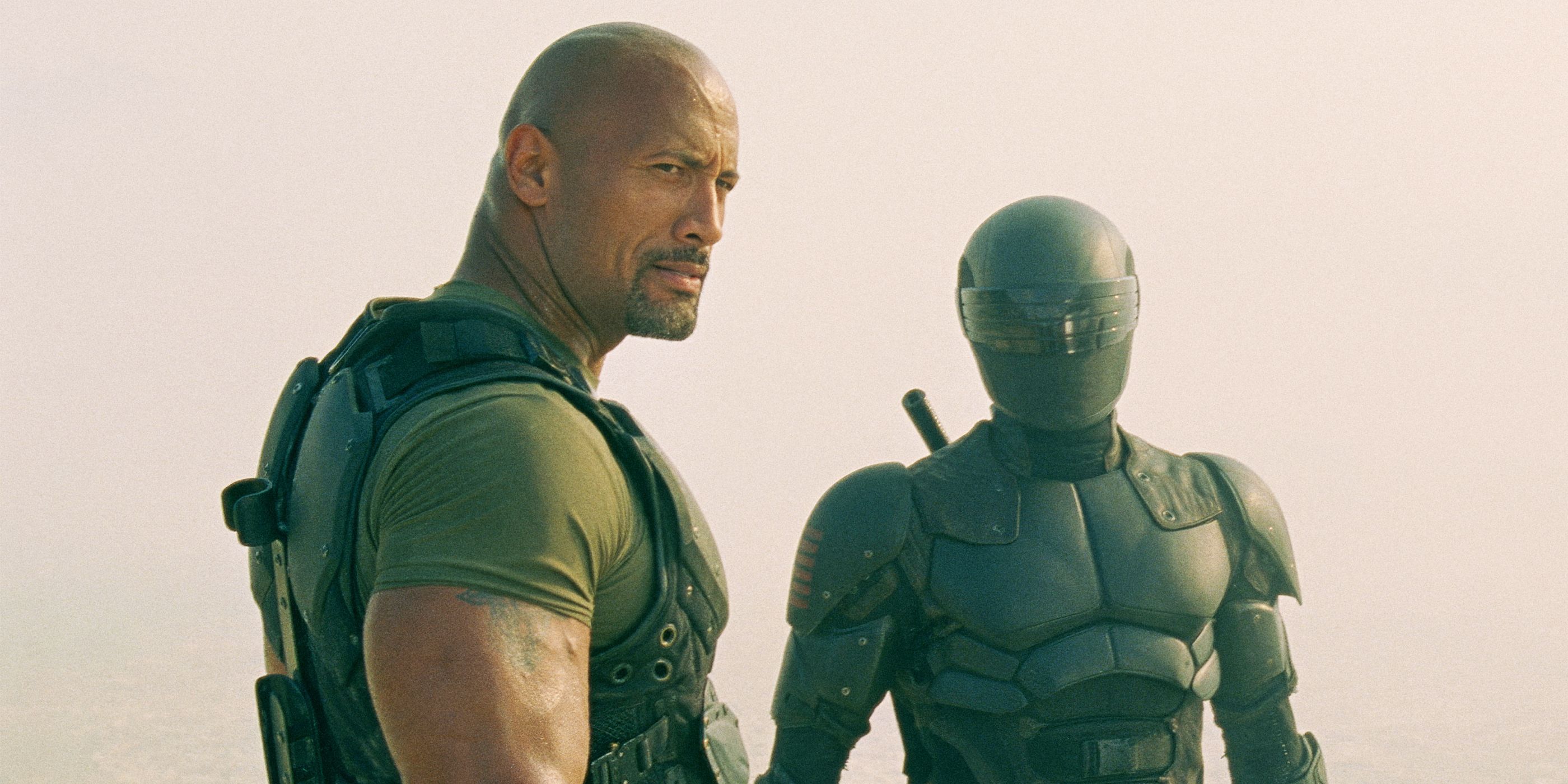
This companion piece to Robert Eggers’ 2024 “Nosferatu” tells the tale of a 14th-century town beset by a werewolf. Willem Dafoe plays the landowner-hunter hired by the king to lead the charge against the beast.
What sets Dafoe’s character apart from the film’s victims is the amount of wool he wears. “His is the character that really denotes wealth,” says costume designer Linda Muir. Because wool was a scarce commodity at the time, Muir put him in double-layered wool coats and linen shirts. His boots, too, are higher than those of anyone else in the film to emphasize his station. The props department made him a family signet ring, and to complete the look, Muir gave him a bycocket, which is commonly associated with Robin Hood.
David Fincher’s follow-up to “Once Upon a Time in Hollywood,” starring Brad Pitt, is no longer about a cocky stunt double, Cliff Booth — now the stunt man is tending bar.
Fincher’s instructions to costume designer Trish Summerville were to keep things authentic and grounded. “Cliff’s character is very lived in,” Summerville says. So she retained elements of Cliff’s character from the first film, like his love for Hawaiian shirts. “Back then, people didn’t have disposable fashion; you kept your clothes for quite a while. Cliff still has his favorite jeans — Levi’s — moccasins and work shirts.”
In one scene, Cliff wears a Hawaiian shirt featuring beer bottles. Searching for the perfect shirt, Summerville found various rayon numbers from the ’50s through the ’70s printed with images of bottles of booze.
But she needed multiples of the garment for Pitt and his own stunt double. “So I had an artist put them all together, and we printed the graphics on [new] shirts.” She adds, “It made me laugh. Cliff’s a chill rascal, so I thought the shirt was just great for him.”
When Angela (Olivia Wilde) and her husband, Joe (Seth Rogen) — a couple on edge — invite their loud upstairs neighbors (Penélope Cruz and Edward Norton) to an intimate dinner party, things take an unexpected turn.
In early meetings with Wilde, costume designer Arianne Phillips came to understand how the doorways and windows of Angela’s apartment created “beautiful framing” — so much so that Phillips thought of the costumes like portraits or photographs.
“Olivia really loved the idea that Angela’s creative identity is so absorbed into the apartment that she basically blends into the walls,” Phillips says. “There’s a funny scene with her and Joe in the bedroom when she’s asking him about the paint color, and all the colors are so close, you can’t tell them apart. That was reflected in her blouse too.”