When C.S. Lewis comes to mind, more often than not, you're likely to start thinking about The Chronicles of Narnia. The fantasy series is his most beloved work of fiction for a reason, spawning not only a very successful literary series but also a fan-favorite movie trilogy that might not have reached the same heights of success as Harry Potter, but it was an important part of the 2000s nonetheless.
Long before the Pevensies ever walked through the wardrobe, though, Lewis penned another otherworldly adventure that expertly combines pulpy science fiction, philosophical themes, and fantasy in one amazingly creative package. If you've never explored the rich worlds detailed in The Ransom Trilogy, then consider this your lamppost signaling you toward the stars.
Perhaps more commonly known as either The Space Trilogy or The Cosmic Trilogy, this saga is quite unlike what Lewis fans may already be used to with The Chronicles of Narnia. The story began in 1938 with Out of the Silent Planet, followed by Perelandra (sometimes referred to as Voyage to Venus) in 1943, and concluding two years later with That Hideous Strength — which itself was re-released in an abridged format titled That Tortured Planet. If you haven't heard of this trilogy before, that's okay. Lewis was a prolific writer in the realms of theology, philosophy, and, yes, even fiction. Here, instead of transporting the audience to parallel worlds and establishing a multiverse, he takes Dr. Elwin Ransom to the stars.
After being kidnapped by a pair of derelict scientists, Ransom is swept away to Mars (called Malacandra by its inhabitants), where he finds himself on a strange adventure that mixes pre-Space Age sci-fi with Lewis' particular brand of theologically-minded fantasy. In the next book, Ransom journeys back into space to Venus (called Perelandra), where he is thrust into the middle of a Garden of Eden-like nexus event, forced to keep bent spiritual forces from corrupting this world as was the case with his own. Interestingly, Lewis concludes this cosmic trilogy on Earth. Having established the cosmology of the heavens and laced them with deeper spiritual truths, the author reorients the narrative to the terrestrial world by introducing the dystopian think tank N.I.C.E., which aims to bend mankind to their will by gradually degrading society on a moral level. Only Ransom and his allies stand in the way, hoping to reawaken an ancient Merlin himself to stand in contrast to the demonic forces at play.
That's right, this series that begins with such imaginative depictions of alien lifeforms and sci-fi wonders ultimately wraps up back on Ransom's homeworld with a finale that blends the cosmic worldview with Arthurian legend and near-fantasy aesthetics. That may sound preposterous at first, like Lewis is trying to do too much at once, but once you see the greater cosmology that he unveils here, it becomes obvious that there would be such major earthbound ramifications for what Ransom (and others) learn in the heavens. The Ransom Trilogy is arguably Lewis’ most under-appreciated work of fiction, masterfully unraveling themes the professor discussed in his academic work but expressed with a thrilling, high-concept narrative. Indeed, his criticisms of academia in That Hideous Strength echo his non-fiction essay The Abolition of Man, albeit translated to a fictional context.
Moreover, Lewis connects interplanetary alien overseers deemed the Oyéresu with angels and demons, revealing that every new world has an Oyarsa in charge. Earth must be the final battleground, as our world's Oyarsa, known as the "Bent One," actively rebelled against the creator, whom Lewis refers to as Maleldil — a being with striking similarities to Lewis' later depiction of Aslan in Narnia, with both acting as representations of Jesus Christ. Even more interesting, the Ransom Trilogy connects its rich mythology to that of Tolkien’s Middle-earth saga, going so far as to reference the kingdom of Númenor in its climactic installment.
The scores below reveal your true character. Your highest number is your match. Even a tie tells a story — the Fellowship was never made of simple people.
You carry something heavy — and you carry it alone, even when you don't have to. You were not born for greatness, and that is precisely why greatness chose you. Your courage is not the roaring, sword-swinging kind; it is quiet, stubborn, and terrifying in its refusal to quit. The Ring weighs on you more than anyone can see, and still you walk toward the fire. That is not weakness. That is the rarest kind of strength there is.
You are, without question, the best of them. Not the most powerful, not the most celebrated — but the most essential. Your loyalty is not a trait; it is a force of nature. You would carry the person you love up the slopes of Mount Doom if it came to that, and we both know you'd do it without being asked. The world needs more people like you, and the world is lucky it has even one.
You were born to lead, and you have spent years running from it. The crown is yours by right, but you know better than anyone that right means nothing without the will and the worthiness to back it up. You are tempered by loss, shaped by long roads, and defined by a code of honour you hold to even when no one is watching. When you finally step forward, the world shifts. Because it was always waiting for you.
You have seen more than you let on, and you say less than you know — which is exactly as it should be. You are a catalyst: you do not fight the battles yourself, you ignite the people who can. Your wisdom comes not from books but from an age of watching what happens when it is ignored. You arrive precisely when you mean to, and your presence alone changes what is possible. A wizard is never late.
Graceful, perceptive, and almost preternaturally calm under pressure — you see things others miss and act before others react. You do not need to make a scene to be remarkable; your presence speaks for itself. You are loyal to those you choose to stand beside, and that choice is not made lightly. You have lived long enough to know that the most beautiful things in this world are also the most fragile, and that is why you fight to protect them.
You are loud, proud, and absolutely formidable — and beneath all of that is one of the most fiercely loyal hearts in Middle-earth. You don't do anything by half measures. Your friendships are forged like iron, your grudges run as deep as mines, and your courage in battle is the kind that makes legends. You came into this fellowship suspicious of everyone and ended it willing to die for an elf. That is not a small thing. That is everything.
You think in centuries and act in absolutes. Order, dominion, control — not because you are cruel by nature, but because you have decided that the world left to itself always falls apart, and you are the only one with the vision and the will to hold it together. You were not always this. Something was lost, or taken, or betrayed, and the version of you that stands now is the answer to that wound. The tragedy is that you're not entirely wrong — just entirely too far gone to course-correct.
You are a study in contradiction — pitiable and dangerous, cunning and broken, capable of both cruelty and something that once resembled love. You are defined by loss: of innocence, of self, of the one thing that gave your existence meaning. Two voices war inside you constantly, and the tragedy is that the better one sometimes wins, just not often enough, and never at the right moment. You are a warning, yes — but also a mirror. We are all a little Gollum, given the right ring and enough time.
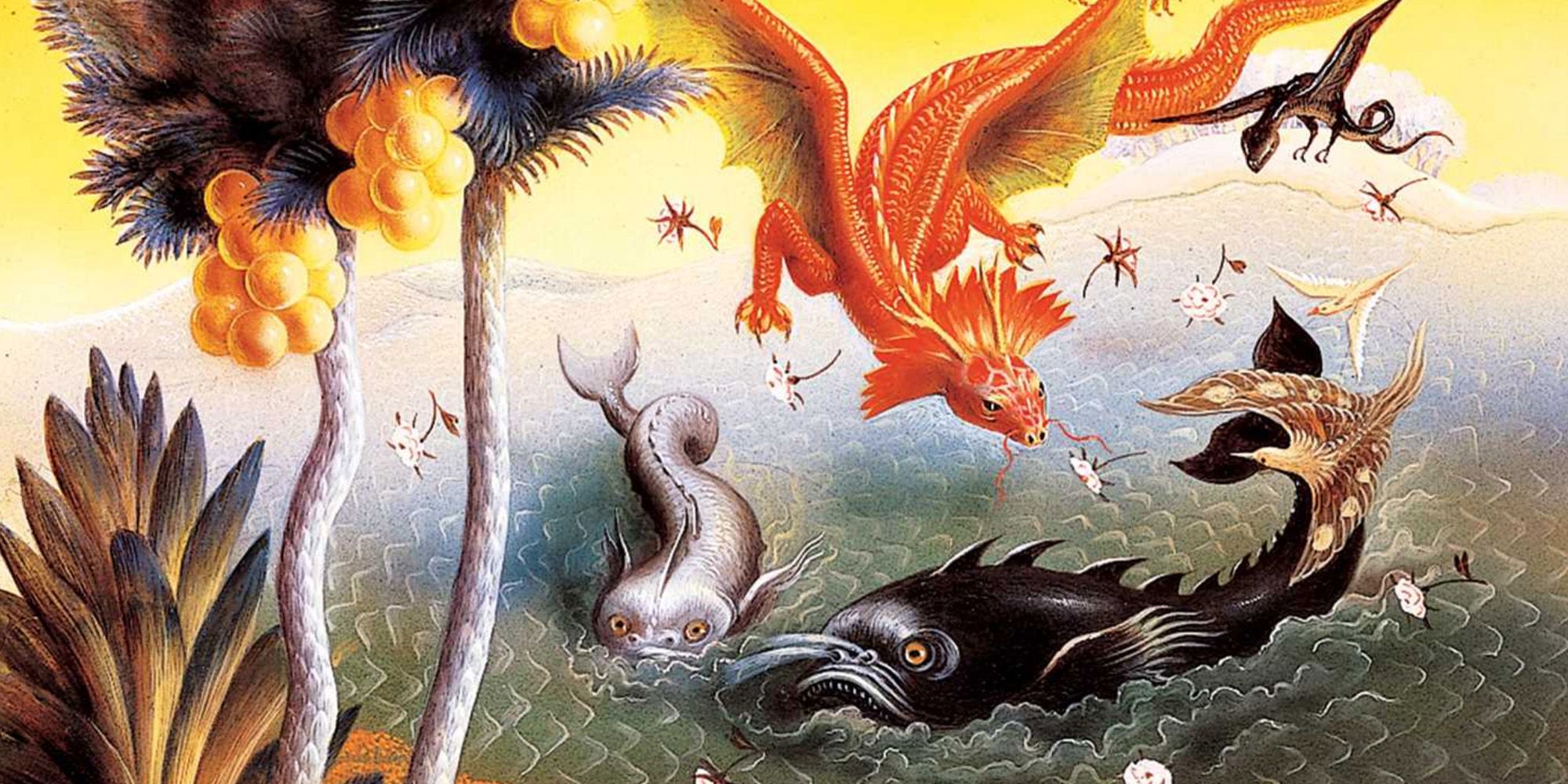
Lewis' Ransom Trilogy is endlessly imaginative. From the descriptions of alien worlds as vibrant creations with a diverse grouping of fantastical inhabitants, to the way the author inserts deep theological arguments so naturally into the text, Lewis explores the far reaches of his speculations entertainingly and thought-provokingly. Alien creatures like the hross and the sorns have distinct cultures that feel lived in and developed, and although the eldila (the invisible spiritual beings akin to angels; some being Oyéresu) remain quite mysterious throughout, their presence adds a richness to the text that more materialistic science fiction often lacks. And yet, Lewis himself never shackled his narrative to the sci-fi genre, famously deeming That Hideous Strength as a "modern fairy-tale for grown-ups."
Folks still craving more after the three-part book saga should consider Lewis' The Dark Tower — no, it's not related to the Stephen King series. Evidently the author's initial attempt at a Ransom-led sequel, this unfinished tale offers a parallel glimpse at where the trilogy could have ventured. For those willing to go even a step further, Lewis initially attributed The Screwtape Letters to being discovered by Ransom himself, further strengthening the connection between the eldila and the world of biblical angels and demons. Although not as popular as The Chronicles of Narnia, C.S. Lewis' Ransom Trilogy is a phenomenal piece of speculative fiction that transcends genre, appealing to various audiences and rife with complex and engaging material. It may never get adapted for the big (or small) screen like Narnia — and perhaps that's for the best — but it deserves to be revisited all these years later.
Narnia: The Magician's Nephew hits theaters in 2027.