
Erielle Sudario is a Collider News and Feature Author from Australia and has worked in the journalism industry since 2018. She has a passion for entertainment and pop culture news and has interviewed YouTubers, voice actors, film directors, and musicians throughout her career. When she's not writing, you can see Erielle building keyboards, reading a good book, playing video games, and creating content on social media.
The Social Reckoning comes out this Friday, and the critics have spoken. The feature is a standalone sequel to 2010's award-winning movie The Social Network, based on Ben Mezrich's book The Accidental Billionaires. The original film told the story of Facebook's creation, the dispute between Mark Zuckerberg (Jesse Eisenberg) and his former friend Eduardo Saverin (Andrew Garfield), and the lawsuit involving the Facebook founder and the Winklevoss twins (both played by Armie Hammer). Before you watch the sequel, here's what critics have to say about the upcoming feature.
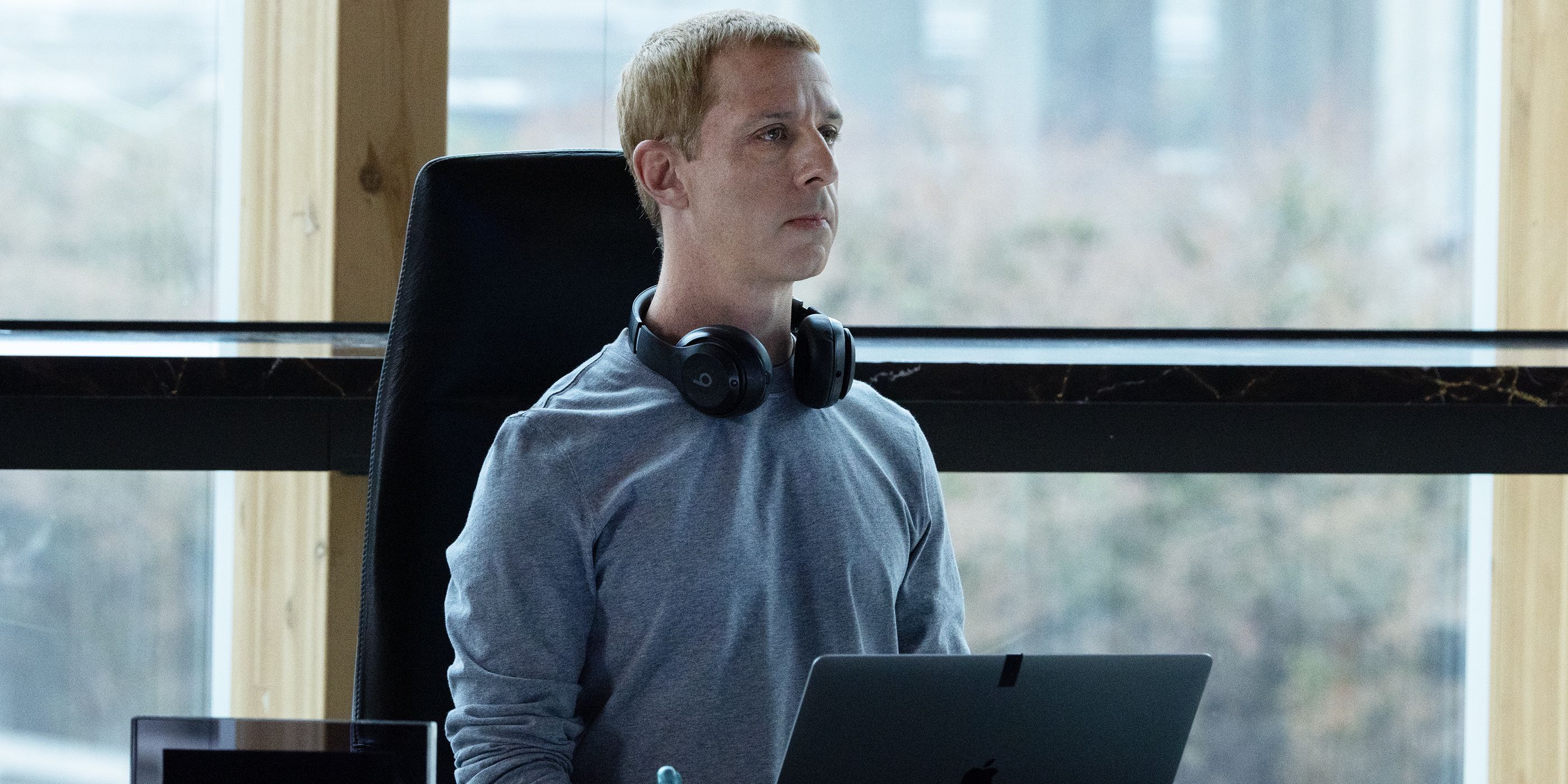
The Social Reckoning was directed by Aaron Sorkin and features a new ensemble cast. Jeremy Strong (The Good Wife) replaces Eisenberg as Mark Zuckerberg, while Jeremy Allen White (The Bear) plays Wall Street Journal reporter Jeff Horwitz, and Mikey Madison (Anora) plays former Facebook employee and whistleblower Frances Haugen. The feature retells the story of the "2021 Facebook Leak," in which The Wall Street Journal published internal Facebook documents as part of its The Facebook Files investigation. These documents exposed the harmful effects Facebook had on its users, including radicalization, hate speech, and negative body image, as well as the company's alleged prioritization of profits over user safety.
Reviews for The Social Reckoning have arrived, and its reception has been much more mixed than that of its predecessor. As of this writing, The Social Reckoning has earned a 60% critics' score on Rotten Tomatoes, with some critics arguing that the movie fails to capture what made The Social Network great. Collider's Taylor Gates gave The Social Reckoning a 7/10 in her review, praising Madison and Allen White's performances and how the movie presents complex information in a "digestible and entertaining way." However, she described the follow-up as a "downgrade" from The Social Network.
Your answers have pointed to one Oscar Best Picture winner above all others. This is the film that was made for the way your mind works.
You are drawn to films that operate on multiple levels simultaneously — that begin in one genre and quietly, brilliantly migrate into another. Bong Joon-ho's Parasite is a film about class, desire, and the architecture of inequality that manages to be darkly funny, deeply suspenseful, and genuinely shocking across a single extraordinary running time. Your instinct is for cinema that hides its true intentions until the moment it's ready to reveal them. Parasite is exactly that — a film that rewards close attention and punishes assumptions, right up to its devastating final image.
You want it all — and this film gives you all of it. The Daniels' Everything Everywhere All at Once is one of the most maximalist films ever made: action comedy, multiverse sci-fi, family drama, existential crisis, and a genuinely earned emotional core that sneaks up on you amid the chaos. You are someone who responds to ambition, who doesn't want cinema to choose between being entertaining and being meaningful. This film refuses that choice entirely. It is overwhelming by design, and its overwhelming nature is precisely the point — because the feeling of being crushed by infinite possibility is exactly what it's about.
You are drawn to cinema on a grand scale — films that understand history not as a backdrop but as a force, and that place their characters inside that force and watch what happens. Christopher Nolan's Oppenheimer is a film about the terrifying gap between what we can do and what we should do, told with the full weight of one of the most consequential moments in human history behind it. You want your films to feel important without feeling self-important — to earn their ambition through sheer craft and the gravity of their subject. Oppenheimer does exactly that. It is enormous, complicated, and refuses easy comfort.
You are drawn to films that foreground their own construction — that make the how of the filmmaking part of the what it's about. Alejandro González Iñárritu's Birdman, shot to appear as a single continuous take, is cinema examining itself through the cracked mirror of a fading actor's ego. You respond to formal daring, to the feeling that a film is doing something that probably shouldn't be possible. Michael Keaton's performance and Emmanuel Lubezki's restless camera create something genuinely unlike anything else — a film that is simultaneously about creativity, relevance, self-destruction, and the impossibility of ever truly knowing if your work means anything at all.
You are drawn to cinema that trusts silence, that refuses to explain itself, and that treats dread as a form of meaning. The Coen Brothers' No Country for Old Men is a film about the arrival of a new kind of evil — implacable, arbitrary, and utterly indifferent to the moral frameworks we use to make sense of the world. It is one of the most formally controlled films ever made, and its controlled restraint is what makes it so terrifying. You want your films to haunt you, not comfort you. You are not interested in resolution if resolution would be dishonest. No Country for Old Men is honest in a way that most cinema never dares to be.
While The Social Reckoning was marketed as the long-awaited sequel to The Social Network, you don't have to watch the 2010 feature to understand the new movie. The Social Network covers Facebook's creation when Mark Zuckerberg was still a Harvard University student, as well as the legal troubles he faced as the company grew. These events took place between 2003 and around 2009, while The Social Reckoning takes place roughly a decade later, between 2019 and 2021. The sequel primarily follows Jeff Horwitz and Frances Haugen as they work to hold Facebook accountable for the harm it has caused, while Zuckerberg does not directly interact with the two leads.
But just because The Social Network isn't mandatory viewing doesn't mean it's not worth watching. Critics gave the 2010 movie a Certified Fresh 96% score on Rotten Tomatoes, while audiences gave it an 87% score on the Popcornmeter. It was also nominated for Best Picture at the Academy Awards and won "Best Adapted Screenplay," "Best Film Editing," and "Best Original Score."
The Social Reckoning enters theaters on October 9, 2026. Follow Collider for more updates.