You may have heard the popular saying "if it ain't broke, don't fix it." Basically, it means you shouldn't waste time trying to tweak and perfect something that's completely fine as it is. It's perhaps debatable, but maybe this sentiment should be circulated throughout Hollywood more.
There have been loads of written works adapted to the big screen, some of them to the extent they're just plain overused. It sometimes feels like Hollywood bombards audiences with iteration after iteration of the same basic material. Maybe it's time to give them a rest and let more wholly original stories shine.
It's nearly impossible to get through a Christmas season without seeing at least one of the 40+ adaptations of this novella by Charles Dickens. There are so many adaptations of this story, some animated, some live-action, one featuring the Muppets, and even one starring Bill Murray. Some are older and in black-and-white, and some are newer with new twists on the story. Et cetera, et cetera, ad infinitum.
You're likely familiar with the plot: a grumpy old man named Scrooge hates Christmas, but is visited by three ghosts who are able to change his mind. It's got a good moral about selflessness, which is probably why it's been remade so many times. The story's enduring appeal comes from how neatly it combines a ghost story and a redemption arc in a compact narrative.
Pride and Prejudice is an early feminist romance novel written by Jane Austen. The story concerns a family of two parents and five daughters living on an upscale estate in rural England. The daughters are reaching adolescence, and due to the cultural norms at the time, are being pressured into being married by their parents.
Many are easily bored by the novel because it is very much like a soap opera, but there is no denying the cultural impact it has. Once again, there are just too many adaptations of this novel, many of which don't bring anything new to the table save for more modern technology and settings. Perhaps the most creative adaptation is the Bollywood/Hollywood fusion musical Bride and Prejudice (2004), directed by Gurinder Chadha, which makes for a much more fun and energetic version of the novel.
Bram Stoker probably didn't know he'd be writing the most popular recurring character in horror when he wrote his 1897 novel Dracula. That's right: Count Dracula is the most used character in horror, appearing in a whopping 60+ films. The novel's numerous themes like gothic horror and superstition gives each adaptation plenty of room to emphasize a different side of the Count.
He has been played by Hungarian stage actor Bela Lugosi, Gary Oldman, and several times by Sir Christopher Lee, which was a role he became highly associated with. Though many of these films do deviate from the source material a bit for a fresh spin on the horror story, it doesn't change the fact that in the last 100 years, there have just been too many of them. Count Dracula needs a break too, sometimes.
Lewis Caroll wrote this book back in the 19th century. Though it's more commonly known by a simplified title: Alice in Wonderland. The story concerns a young girl named Alice who winds up in a strange and magical world called Wonderland, filled with many bizarre creatures and places.
Perhaps the most famous incarnation is Disney's 1951 animated musical film. More recent adaptations include Tim Burton's 2010 live-action series. But these are only the most famous. There are approximately 19 different adaptations of this story, the first coming out as early as 1903 in the form of a black-and-white silent film. Because the story is built around surreal encounters rather than a tightly structured plot, filmmakers have enormous freedom to reinvent Wonderland's creatures.
Peter Pan was initially a play first performed in 1904 before it became a novel. Both were written by J. M. Barrie. The story of a magical boy who helps some young British children fly to a magical realm known as Neverland, the novel/play has been adapted several times, many of which were done by Disney. The melancholy idea of refusing to grow up has made the story unusually adaptable across family films and sequels.
Disney first produced it in the form of a 1953 animated musical, followed by a 2002 sequel, Return to Neverland. There's also Hook (1991), a story about Peter Pan (Robin Williams) returning to Neverland as an adult. On top of that, there's a 2003 live action film, and the Warner Bros. prequel movie Pan (2015).
Your answers point to the iconic universe your values, your instincts, and your particular way of seeing the world were built for. This is where you would find your people — and your purpose.
You believe in the cause — in the idea that freedom is worth fighting for even when the odds are impossible and the empire is vast.
You understand, in the deepest part of yourself, that the journey matters as much as the destination — and that the world's beauty is worth protecting even at great cost.
You believe that love, loyalty, and doing what's right are not naive sentiments — they are the most powerful forces in any world, magical or otherwise.
You see the world clearly — its power structures, its hypocrisies, its brutal arithmetic — and you are not paralysed by that clarity. You use it.
You believe the future is worth building — that curiosity, cooperation, and the expansion of understanding are not just ideals but the most practical path forward for any civilisation.
Technically, this one is a fairy tale/short story written by French author Gabrielle-Suzanne Barbot de Villeneuve. The story is about a young woman named Belle who is taken prisoner in the castle of a reclusive lord, who happens to be a monster. Belle begins to see the humanity in the Beast, as he was once a normal person, but is under a curse. The two eventually fall in love, the Beast returns to his human form, and they marry.
Listing how many times this story has been adapted for film would be enough to write a story of its own, but its most popular adaptations are Disney's animated musical Beauty and the Beast (1991), and its 2017 live-action remake starring Emma Watson. The central contrast between Belle and the Beast has made the tale a simple but powerful one that filmmakers repeatedly return to.
So it turns out the "all for one and one for all" motto didn't really stick with Hollywood filmmakers, as the industry has gone a bit overboard with adapting Alexandre Dumas' novel for silver screens. At its core, the story follows the young d'Artagnan as he joins Athos, Porthos, and Aramis and becomes entangled in schemes involving the French court.
Depending on where you do your research, the number of The Three Musketeers films ranges anywhere from 30 to well over 50, some of which have additional twists on the story. For example, there was a 3D version released in 2011, starring Logan Lerman.
William Shakespeare wrote numerous plays between 1585 and 1613, though many weren't published in book form until later. Most of them were comedies, but others are tragedies or historical plays. Since there is an abundance of them, and since the script is practically already written, there is a plethora of Shakespeare movies that have been made within the last century or so.
The worst offender is Shakespeare's acclaimed tragedy Hamlet (1603). This play has been adapted for the big screen 17 times, which is a bit ridiculous since the script really doesn't change between most of the adaptations. The most recently released adaptation was in 2009. Heck, even Shakespeare's tragedy MacBeth (1623) has been done to death, with the most recent iteration arriving in 2021. Some find Shakespeare films to be lazy, as the movies basically write themselves. Some movies absolutely offer a more creative spin on the premise; they're the same, just slightly more modern than their predecessors.
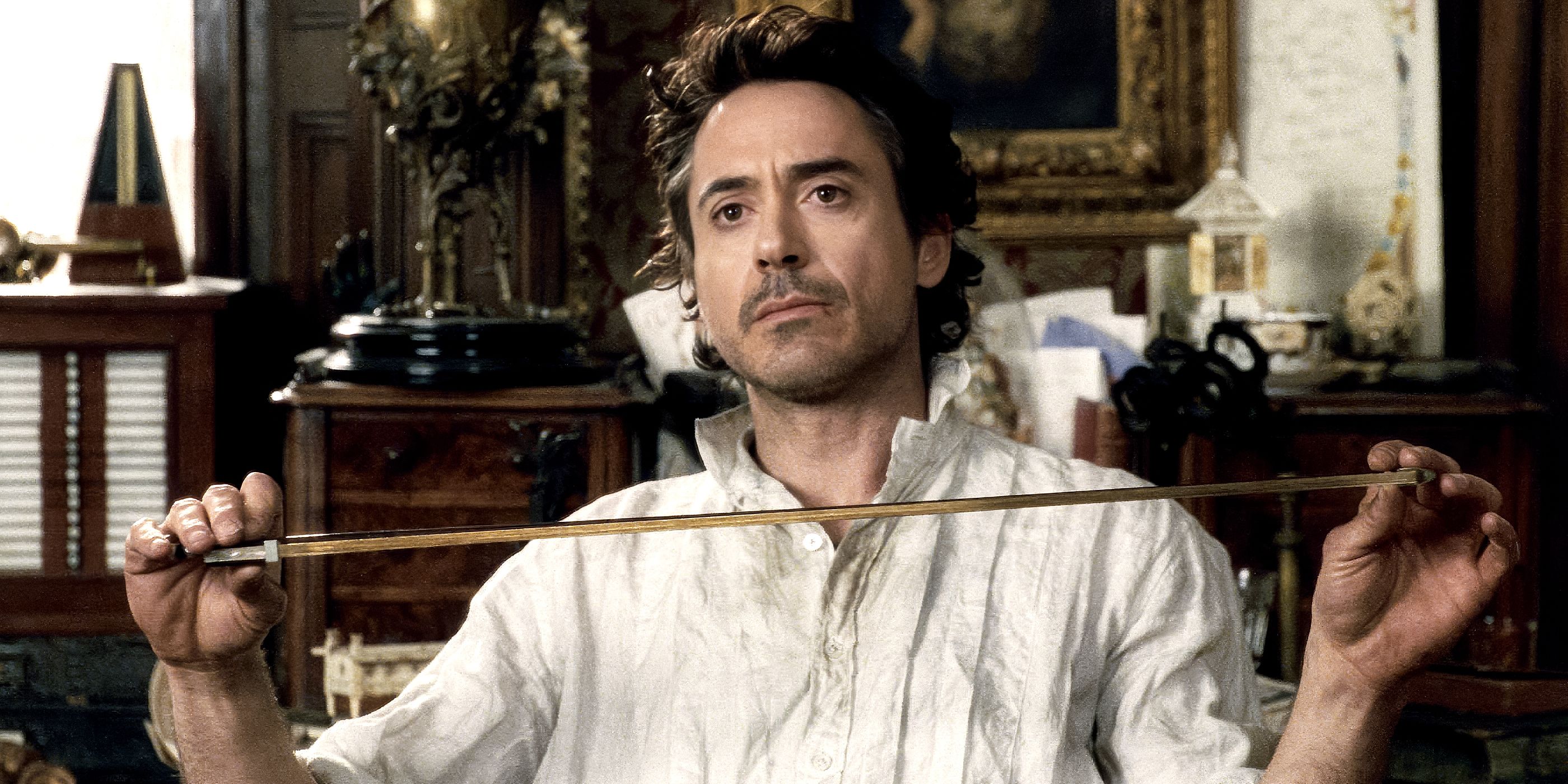
Sherlock Holmes is a series of novels and short stories about the fictional detective of the same name. The stories set the stage and standards for many, many other detective novels. The cultural impact Sir Arthur Conan Doyle's works have had is massive. But it doesn't change the fact that there are still too many movies.
There have been 11 movies made based on Sir Doyle's works, but that's not all — there have also been 13 different TV series made as well. Being the world's greatest detective is hard work; perhaps he's due for a rest. There hasn't been a proper film adaptation since 2011 with Sherlock Holmes: A Game of Shadows, starring Robert Downey Jr.
Mary Shelley wrote this early horror over two centuries ago, but that hasn't stopped filmmakers from milking it for all its worth. Another familiar horror icon, Frankenstein's monster has appeared in 15 feature-length films to date, with an influx in the mid-2010s, which saw three full movies released in a span of two years.
Hollywood may have brought Frankenstein's monster back to life almost as many times as Victor Frankenstein did. It's honestly kind of insulting to the character of the monster, because all the monster really wanted in the novel was to be left alone and not be treated like the creature that he was. Yet Hollywood keeps treating him as the villain, or at least for the most part. Poor guy.