Doctor Who has consistently taken a very different approach to most franchises when it comes to bringing back past Doctors. Multi-Doctor stories are par for the course in the world's longest-running sci-fi TV show. Time travel naturally means the Doctor has often tended to run into past or future incarnations, albeit often due to the intervention of the Time Lords; multi-Doctor arcs became a little more unusual (and a lot more whimsical) after 2005's relaunch and the destruction of Gallifrey. But they still happen, and they remain some of the most-loved special events.
Surprisingly (and delightfully), Doctor Who has tended to avoid recasts. Instead, past Doctors have returned to their roles decades later, despite physical changes. Sometimes it's been explained away, with a nice bit of temporal technobabble. On other occasions, it's simply been ignored, with the assumption viewers won't mind. But what if Doctor Who took a different approach? What if classic Doctor were actually recast, meaning new actors played these iconic roles in fresh adventures?
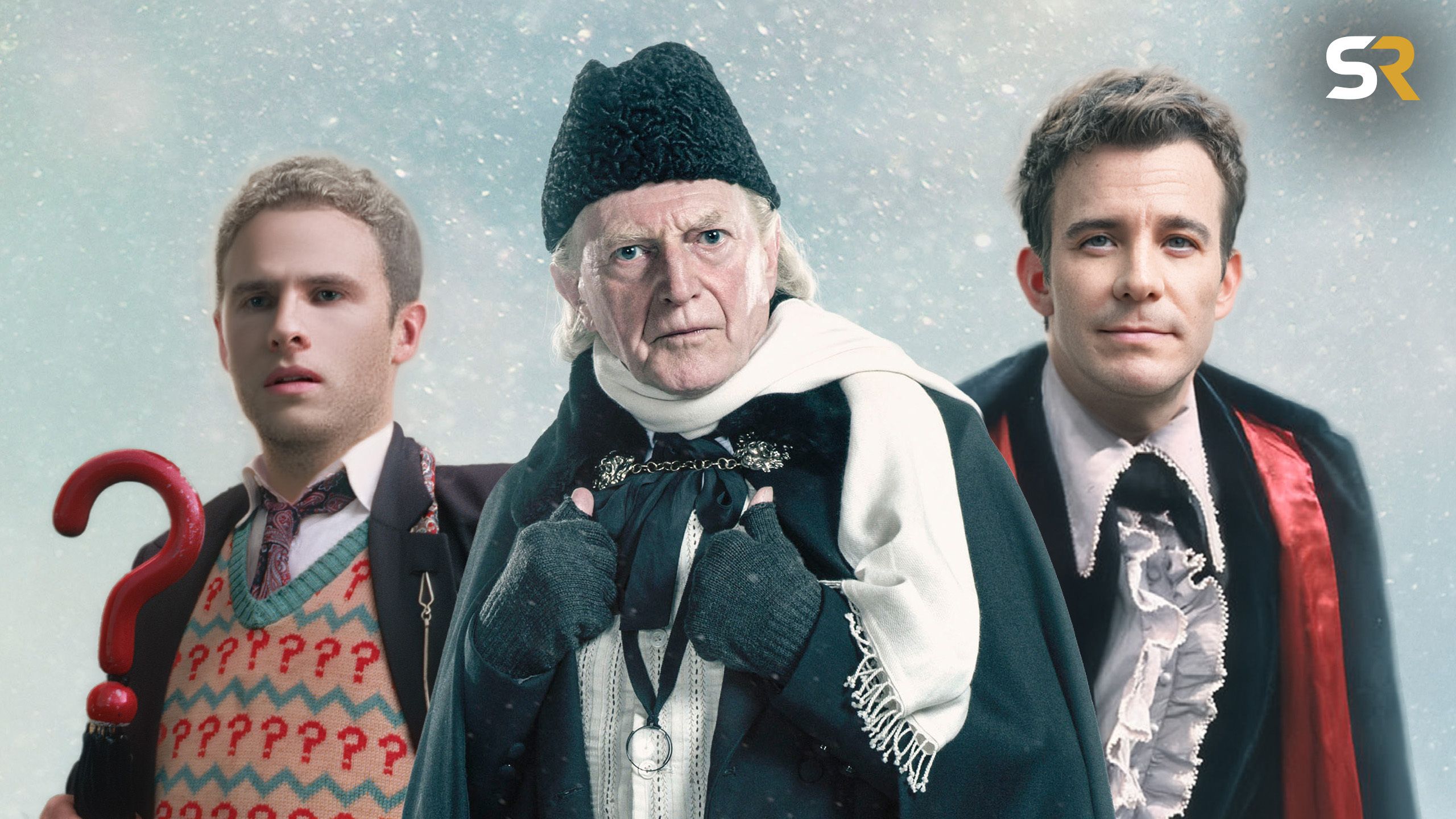
There is precedent for a recast, although for the saddest of reasons; William Hartnell sadly passed away back in 1975. Richard Hurndall played the First Doctor in the 1983 special The Five Doctors, but the role has more recently been given to David Bradley. Celebrated on both the stage and screen, Bradley made his debut playing Hartnell himself in An Adventure in Space and Time, and has gone on to play the First Doctor both on-screen and in Big Finish audio-dramas.
Not only does Bradley physically resemble Hartnell, he also perfectly captures the First Doctor's voice and delivery. True to the original, his First Doctor has a surprising amount of vulnerability and compassion beneath the irascible exterior. He has, however, come in for some serious criticism because of the writing of Twice Upon A Time, an adventure in which he played the First Doctor alongside Peter Capaldi. Many viewers thought the portrayal was a little too sexist. But, importantly, that's a criticism of the writing; his performance is universally praised.
Second Doctor Patrick Troughton died in 1987, two years after his last Doctor Who appearance in The Two Doctors. Reece Shearsmith briefly appeared as Patrick Troughton in An Adventure in Space and Time, and he seems like an inspired choice; frankly, looking back, it honestly feels like a missed opportunity that he hasn't taken on the role before now. Troughton's Doctor was very different to Hartnell's, a deliberate blend of clownish humor and ruthless intensity, and Shearsmith has demonstrated just the kind of versatility needed to make that work.
In both Inside No. 9 and The League of Gentlemen, Shearsmith showed the ability to switch from comedy to menace in an instant. It's true that Shearsmith isn't the perfect doppelganger for Troughton, but that's less important than the ability to portray his character and represent what made the Second Doctor so powerful and unique. With the right direction, Shearsmith can most certainly pull it off.
Jon Pertwee was my favorite Doctor, and I still remember when he died in 1996. The fandom has long hoped for his son Sean Pertwee to take over the role, but he's consistently refused, understandably unwilling to try to fill his father's shoes. Looking beyond this popular fancast, then, the best option is surely Luke Thompson. Best known for Bridgerton, Thompson has just the right blend of charm and eccentricity, and he knows how to carry himself with the kind of confidence the Third Doctor demanded in his interactions with UNIT.
Thompson's on-stage experience means he would understand the theatricality of the Third Doctor in a very real way. Pertwee's Doctor never simply entered a room; he'd stride in with utter self-assurance, dominating the conversation with effortless ease, and Thompson's background means he can make that work. It would be a delight to see Thompson's interpretation of the Third Doctor.
Now we're getting on to the trickiest one of all, Tom Baker's Fourth Doctor. This recast is particularly hard because, as Baker's tenure drew on, he pretty much stopped acting; he was the Doctor and the Doctor was him, in all his glorious eccentricity and whimsical unpredictability. Towards the end of the Baker era, the Doctor's quixotic nature dominated a little too much. Personally, I've always found the slightly less overstated portrayals from Baker's early years more enjoyable.
There's probably no perfect choice to play a young Tom Baker, who's far too complex a person in his own right, even before he became the Doctor. But Harry Melling feels like a good choice; a skilled actor, he's developed a great deal since his time as Dudley Dursley in Harry Potter, and he's demonstrated a remarkable capacity for awkwardness, psychological complexity, and mischievous intelligence. He's just the kind of actor who could capture the range the Fourth Doctor demands.
Peter Davison's Fifth Doctor was deliberately designed to be the polar opposite of his predecessor, a younger Doctor who struggled to dominate and continually found himself underestimated. Watching through from the Baker era, he's something of a shock, but the portrayal becomes convincing as the Davison era continues. It's almost tragic that Davison's strongest performance was in The Caves of Androzani, easily the best Doctor Who regeneration story.
Tom Hughes feels like a pretty good fit for a recast Fifth Doctor. In Victoria, he played Albert as a man whose intelligence, seriousness, and sense of right and wrong often existed in tension with his position. That portrayal demonstrates some of what could make a Hughes version of the Fifth Doctor work; composure, quiet confidence, and complicated emotions that bubble under the surface and aren't always worn on the sleeve.
Colin Baker's Sixth Doctor is another difficult one to pin down, largely because this incarnation was shaped so much by behind-the-scenes drama and poor scripts. There's a sense in which the Sixth Doctor has only really taken shape after his era ended, because more skilled writers worked to redeem the character, while Colin Baker himself has gotten the chance to demonstrate just what a fine Doctor he could have been had he been given the chance. All this naturally makes recasting the Sixth Doctor rather difficult.
My own choice would be Simon Russell Beale, another theatrical actor who'd be well suited to dominating the screen. Beale has consistently demonstrated an ability to portray intellectual authority, a degree of pomposity, and even the kind of menace you sometimes got with the Sixth Doctor. Frankly, I'd be fascinated to see the way Beale portrays the Sixth Doctor, and whether his portrayal would help redefine the character in the popular imagination as he's already been redefined in fandom.
Finally, we turn to another complicated Doctor: Sylvester McCoy's Seventh Doctor, who began as a somewhat comedic, clownish figure, but who was gradually transformed into a delightfully dark and manipulative hero. The McCoy era is one where the character gradually transforms, undergoing an arc that was sadly never completed on screen, given Doctor Who was canceled in 1989. It continued on in prose, particularly in Virgin's New Adventures range, but general audiences have never really encountered this.
That, more than anything else, makes the idea of a recast Seventh Doctor all the more exciting; this is a Doctor whose stories could continue. The best pick would surely be Iain De Caestecker, who's no stranger to genre television; he's best known for Agents of S.H.I.E.L.D., where he played the scientist Fitz. This performance, more than anything else, demonstrates De Caestecker's range; Fitz went through an emotional journey of his own, and the actor even wound up portraying a dark, mirror-world Nazi-esque version. There can be no doubt he'd be able to handle the Seventh Doctor—and the Scottish accent would help, too.