Feel free to connect with him or check out his work. He's everywhere — Upwork, YouTube, Spotify, SoundCloud, Collider, LinkedIn, Instagram.
There are sci-fi movies you recommend because they are good, and then there are the ones you start defending like somebody insulted a close friend. These are the latter. The frustrating part is that most of them never became the universal shorthand for big-idea science fiction, even though they contain the exact stuff people claim to want.
That is why excuse me if I get a little evangelical about this take. None needs a giant mythology dump or a dozen sequels to leave a mark. They take one strong idea, trap a human being inside it, and keep tightening until the science becomes emotional. If somebody loves ambitious sci-fi and somehow missed these, I almost envy them. There are six very good nights waiting.
Europa Report is about a privately funded crew of astronauts sent to Jupiter’s moon Europa to search for evidence that life may exist beneath its frozen surface, only for equipment failures, communication loss, and mounting casualties to turn the mission into a fight between survival and completing the discovery they crossed the solar system to make.
What kills me about this movie is how seriously the astronauts take the mission even after the mission stops being remotely fair to them. The footage is presented through ship cameras and mission recordings, so there is very little heroic posing. People make decisions in cramped modules, lose contact with Earth, and understand that rescue is basically a fantasy. Then Katya (Karolina Wydra) gets outside onto the Europan ice and detects something beneath it. That moment is exactly why I love hard sci-fi when it is done properly. The danger is terrifying, but curiosity is still stronger. These people may die there, and some part of them still needs to know what is under the ice. That is such a human reason to keep going.
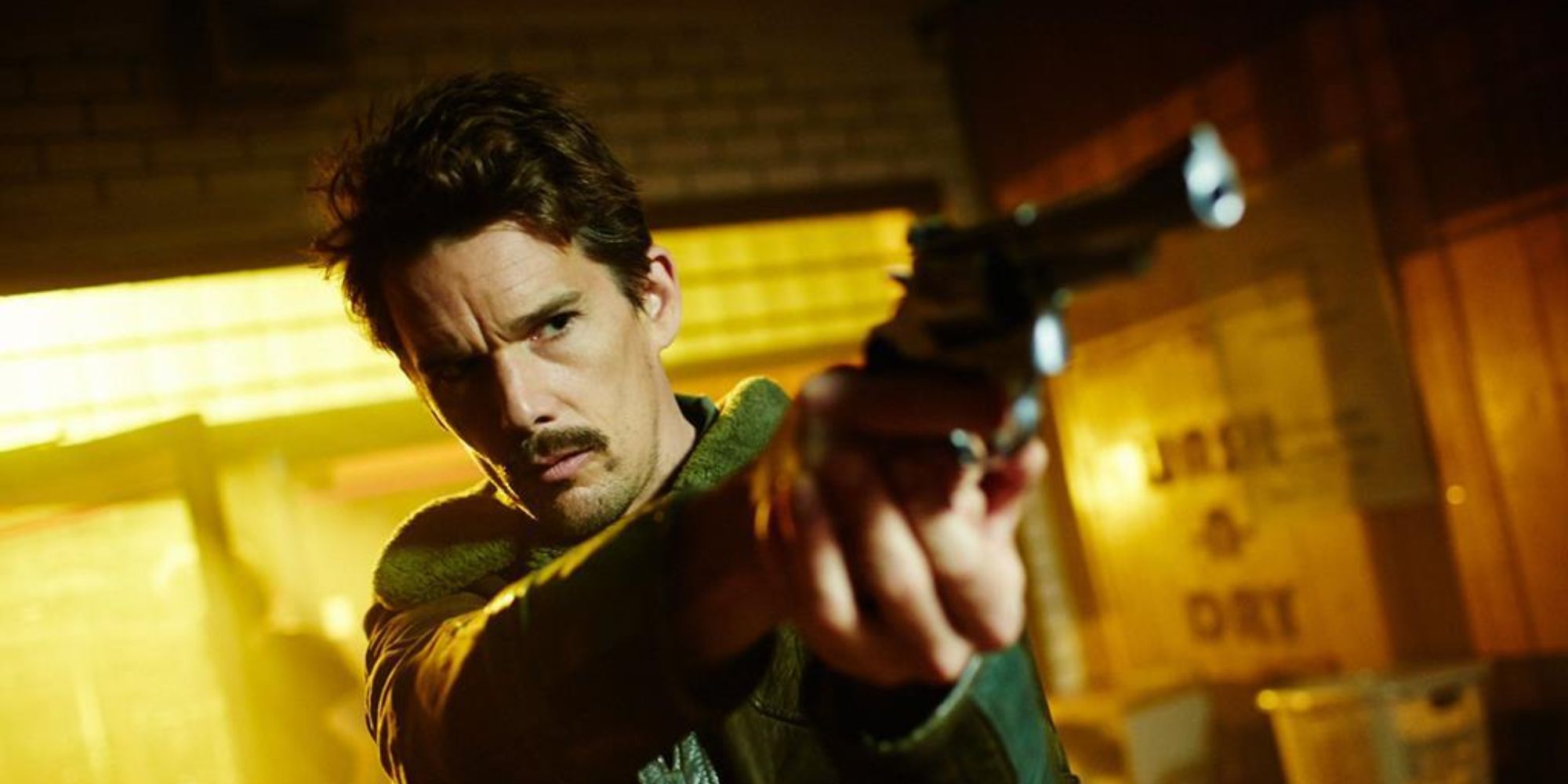
Predestination centers on a temporal agent making one final attempt to stop a terrorist known as the Fizzle Bomber, with the mission pulling him into the extraordinary life story of a stranger he meets while working undercover as a bartender. Ethan Hawke is the agent, Sarah Snook is the person whose history gradually becomes inseparable from the case, and almost every apparently straightforward fact gets more complicated the longer they talk.
Honestly, this is one of those movies I desperately want people to watch without researching first. The bar conversation initially feels like the film has wandered away from the thriller, then you realize the conversation is the machinery. A childhood, love affair, pregnancy, abandonment, recruitment, and time travel start folding into one another until identity itself becomes the puzzle. And the crazy thing is that it never feels like a twist dispenser to me. Underneath all the temporal gymnastics is something painfully sad about loneliness and the desire to finally understand why your life happened the way it did. The timeline is clever. The person trapped inside it is what stays with you.
Coherence takes place during a dinner party where eight friends notice increasingly impossible things happening after a comet passes overhead, eventually discovering that nearby houses may contain alternate versions of themselves created by diverging realities.
That premise sounds enormous. The movie basically uses a house, a street, some glow sticks, and people becoming progressively less trustworthy. I adore that restraint. A group walks outside and finds another house that appears identical to the one they left. Then a box appears containing photographs of the guests, marked in ways nobody remembers. Suddenly every person returning through the front door has to prove they are the same version who walked out. And once Emily (Emily Baldoni) realizes there may be realities where the evening went better, the movie gets nastier than the science alone ever could. Parallel universes are fascinating in theory. Give somebody access to a slightly better version of their own life and they become morally dangerous very quickly.
Your answers point to the world your instincts were built for. This is the universe your temperament, your survival instincts, and your particular brand of stubbornness were made for.
You took the red pill a long time ago — probably before anyone offered it to you. You're a systems thinker who can't help but notice the seams in things.
The wasteland doesn't reward the clever or the well-connected — it rewards those who are hard to kill and harder to break. That's you.
You'd survive here because you know how to exist in moral grey areas without losing yourself completely.
Arrakis is the most hostile environment in the known universe — and you are precisely the kind of person it rewards.
The galaxy far, far away is vast, loud, and in a constant state of violent political upheaval — and you wouldn't have it any other way.
Gattaca is about Vincent Freeman (Ethan Hawke), a man born without genetic selection in a future where DNA determines social opportunity, who secretly assumes the genetic identity of disabled “valid” Jerome Morrow (Jude Law) so he can qualify for a space mission society says his natural-born body should never be allowed to attempt.
I could talk about the production design or the genetics forever, but Vincent swimming against his brother Anton (Loren Dean) is the thing I always come back to. As children, they race into the ocean until one turns back. Anton is genetically superior and cannot understand why Vincent keeps beating him. Years later, Vincent finally tells him the secret: he never saved anything for the swim back. That one line contains the entire movie. Vincent has spent his life passing blood tests, carrying Jerome’s urine, scrubbing dead skin from his body, and leaving almost nothing biological behind because a stray eyelash could expose him. The future has quantified his limitations perfectly. Vincent survives by refusing to accept that the number deserves the last word.
Moon follows Sam Bell (Sam Rockwell), the lone worker nearing the end of a three-year contract mining helium-3 on the far side of the Moon, whose isolated routine collapses after a rover accident leads him to discover another Sam Bell who looks, sounds, and remembers exactly the same life he does.
The reveal is great, but the corporate logic behind it is what makes me furious every time. Sam believes there is a wife and daughter waiting for him because those memories are real to him. Then evidence starts suggesting that the “three-year contract” may simply be the lifespan of whichever Sam has been activated most recently. The company found a cheaper alternative to transporting workers back to Earth, and that solution happens to involve creating human beings who think they have families. Even GERTY (Kevin Spacey), the obvious HAL-shaped source of suspicion, ends up being more compassionate than the corporation employing them. That reversal is beautiful. The robot has programming. The company has a business model. Guess which one scares me more.
Sunshine follows the eight-person crew of Icarus II as they travel toward a dying Sun carrying a massive nuclear device intended to reignite it, humanity’s last realistic chance to prevent Earth from freezing to death. For me, this is the one people need to rediscover most urgently. The mission already feels impossible before the crew detects Icarus I, the previous ship that vanished while attempting the same thing, and decides to alter course because its unused payload could give humanity a second shot. From there, one navigational error damages the heat shield and the whole mission starts bleeding resources, oxygen, and people. Kaneda (Hiroyuki Sanada) walking out onto the shield to repair it while the Sun slowly reaches him is still horrifying because everyone knows exactly what will happen and nobody can bargain with physics. Then there is Capa (Cillian Murphy) alone near the end, carrying responsibility that has become almost absurdly huge for one person.
The later horror turn has always divided people, but I cannot make myself care much when the rest of the movie reaches this high. The Sun is treated as science, god, furnace, and something almost impossible for the human brain to look at directly. And when Capa finally reaches toward that impossible wall of light, the movie lands exactly where great science fiction should. Tiny human being. Unimaginable scale. Still reaching.