Former Doctor Who showrunner Russell T Davies knows his return wasn't quite the triumph he'd hoped for. One of the UK's most respected creators, Davies was the mastermind behind the show's 2005 revival. In 2021, as Chris Chibnall's tenure as showrunner was coming to an end, the BBC officially announced that Davies — affectionately known as "RTD" — was back for a trio of 60th anniversary specials followed by future seasons. It wasn't long until we learned the scale of the BBC's ambitions, when the national broadcaster entered into an unexpected partnership with Disney+.
The rest is history. That partnership may have regenerated Doctor Who, but it was far from a success, and the Disney+ deal ended after two seasons and a spinoff. The end of Doctor Who Season 15 saw Ncuti Gatwa apparently regenerate into former companion Billie Piper, a strange creative decision that's left the world's longest-running sci-fi TV series up in the air while the BBC put Doctor Who out for tender. But, as the BBC look forward to the future, RTD has now published an autobiography that discusses the past; The Queerest of Folk, available now from retailers like Amazon.
Davies is a lifelong Doctor Who fan, penning his first script when he was in his 20s (it later became the Season 1 story The Long Game). But even he admits Doctor Who was running out of steam. "I think Doctor Who has simply been part of the landscape for so long," he explains, "and there have been so many Doctors and so many changes of cast, that it’s simply not grabbing people any more. This new version is twenty years old now, so it’s not new at all, and I think the audience feels that in their bones."
As a result, British audiences greeted Doctor Who with indifference — and, as Davies notes, that's the greatest enemy. This perhaps explains why Davies became known for a near-desperation to make conversation on social media, regardless of whether reactions were positive or not. Even now, for example, Davies defends the decision to bring back Billie Piper in that odd regeneration scene:
"And it worked, because everyone paid attention to the show once more. I can’t begin to tell you how many people – in the streets, students here in Manchester, members of my own family – were talking about it. Two days after transmission, I went to Charlotte Moore’s farewell drinks in London. The great and good of television were there, and I couldn’t believe how many people asked me about Billie. Proper, seasoned television professionals who I never would have thought watch Doctor Who, all saying, ‘Billie, Billie, Billie!’"
"It just didn't work on Disney+," Davies admits. "Simple as that." The goal was to turn Doctor Who into the Whoniverse, a vast expanding franchise with global appeal (especially for American audiences). "It’s an old show," RTD now reflects. "It’s not particularly well known in America. It’s never been on the level of Star Wars or Star Trek, and maybe it didn’t suit supersizing." Looking back, RTD now seems to believe he was simply too ambitious.
I'm not entirely convinced he's right. Doctor Who had flourished in the United States under Stephen Moffat, although it is true it had diminished during Chris Chibnall's time as showrunner. Rather, I think the problem was one of timing; Christopher Nolan has famously argued Hollywood has moved into a post-franchise era, where stand-alones like Oppenheimer and Barbie are more desired than franchises. Every franchise is struggling right now, and interconnectedness and history are no longer the selling points they were a decade ago.
Behind-the-scenes problems left Davies struggling to relaunch Doctor Who properly; with the benefit of hindsight, he admits the first three 60th anniversary specials confused things rather than helping. "It was the sixtieth anniversary, which meant going to a streamer to say this is a brand-new show that’s celebrating sixty years," Davies says. "It’s launching and regenerating at the same time. Quite a difficult concept."
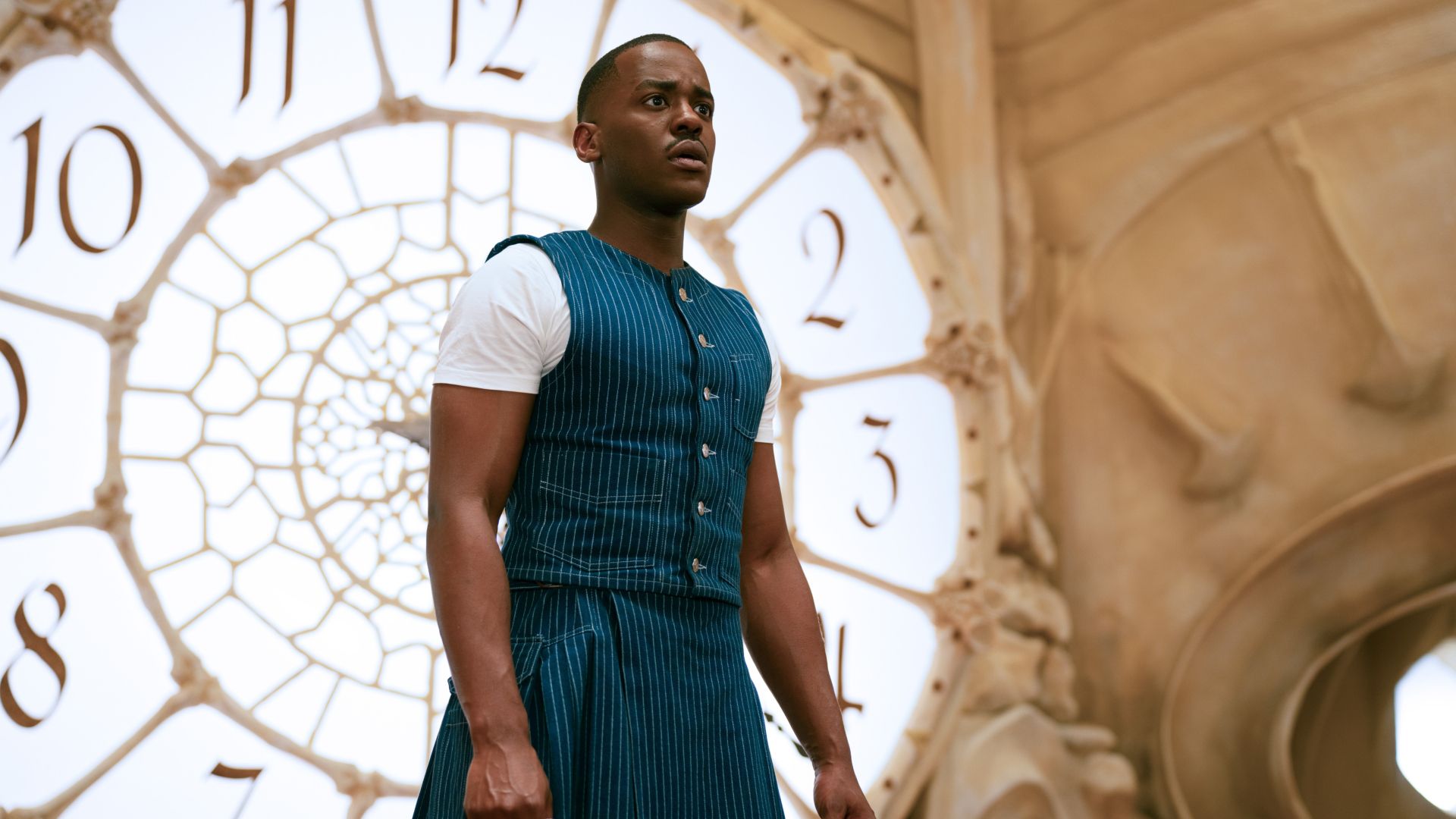
Making matters worse, Fifteenth Doctor Ncuti Gatwa was a hard man to pin down when it came to working on the main seasons. "The dates didn't work for our leading man," Davies admits, "through no fault of our own. And it was absolutely not Ncuti's fault, either."
"I had to write the episodes around him. First of all, I did a Doctor-lite story where he gets written out. And that was ‘73 Yards’, which through sheer invention, actually ended up being one of the most beautiful episodes I’ve ever made. Nonetheless, in a series of only eight episodes, one of them didn’t have our lead actor in it. That was quite a leap. But there was nothing we could have done. We then did a slightly Doctor-lite episode, ‘Dot & Bubble’, which he’s in a lot, but ingeniously, in scenes that only took two days for him to film. So I was dancing like crazy to invent stories in which we could parcel up his filming and still give him weight in the story, and get them shot on a mad schedule."
Davies did a good job with Doctor-lite episodes, but it's worth remembering that these Disney+ seasons were shorter. When Davies' Doctor Who season 3 aired in 2007, the epic story "Blink" was one of thirteen episodes, and David Tennant's Tenth Doctor was already on his second season. Ncuti Gatwa's first season was just eight episodes long, and two of them were Doctor-lites. Viewers didn't really get the right chance to connect to the new Doctor.
Davies adds one final complication: leaks. "When it comes to science fiction, the problem of leaking online is now so vast and so pernicious it threatens to ruin everything," RTD says. "Every decision we ever made, every single plot twist, every single moment, all the way up to the appearance of Billie in the very last seconds of the last series finale, was leaked. It’s absolutely extraordinary, and I swear, it did a lot to destroy the profile of the show."
In RTD's views, leaks lead to cynicism in the fanbase. They essentially poison the well, because the fans' response to a leak is weariness; "an instant assumption that whatever has leaked won't work. They instantly imagine the worst version of it, and then, when they eventually see it, it inevitably confirms their bias."
Davies does have a point; every production struggles with leaks now. And yet, I'm not entirely convinced by his argument; I remember covering Avengers: Endgame, where pretty much the entire plot leaked on social media, and that certainly wasn't received with cynicism. That kind of reaction speaks more to an unhealthy relationship with the fanbase, perhaps a misreading of them in the first place, and may mean ideas like bringing back Sutekh weren't good ones in the first place.
This is the hard truth behind Davies' second Doctor Who run: however hard he argues his case, it simply didn't work. The Whoniverse didn't land well, Ncuti Gatwa's Doctor didn't have the chance he needed to flourish, and the storytelling didn't enthuse the fanbase. The Queerest of Folk presents RTD's perspective on this, and his every decision was understandable. He has a lot to be proud of, including some phenomenal episodes like "73 Yards" and "Rogue," but this era is one his successors will need to learn from if they are to course-correct.