Andy Weir is trying on the producer's hat with Audible's Exoplanet, and the cast and creator couldn't be more enthused.
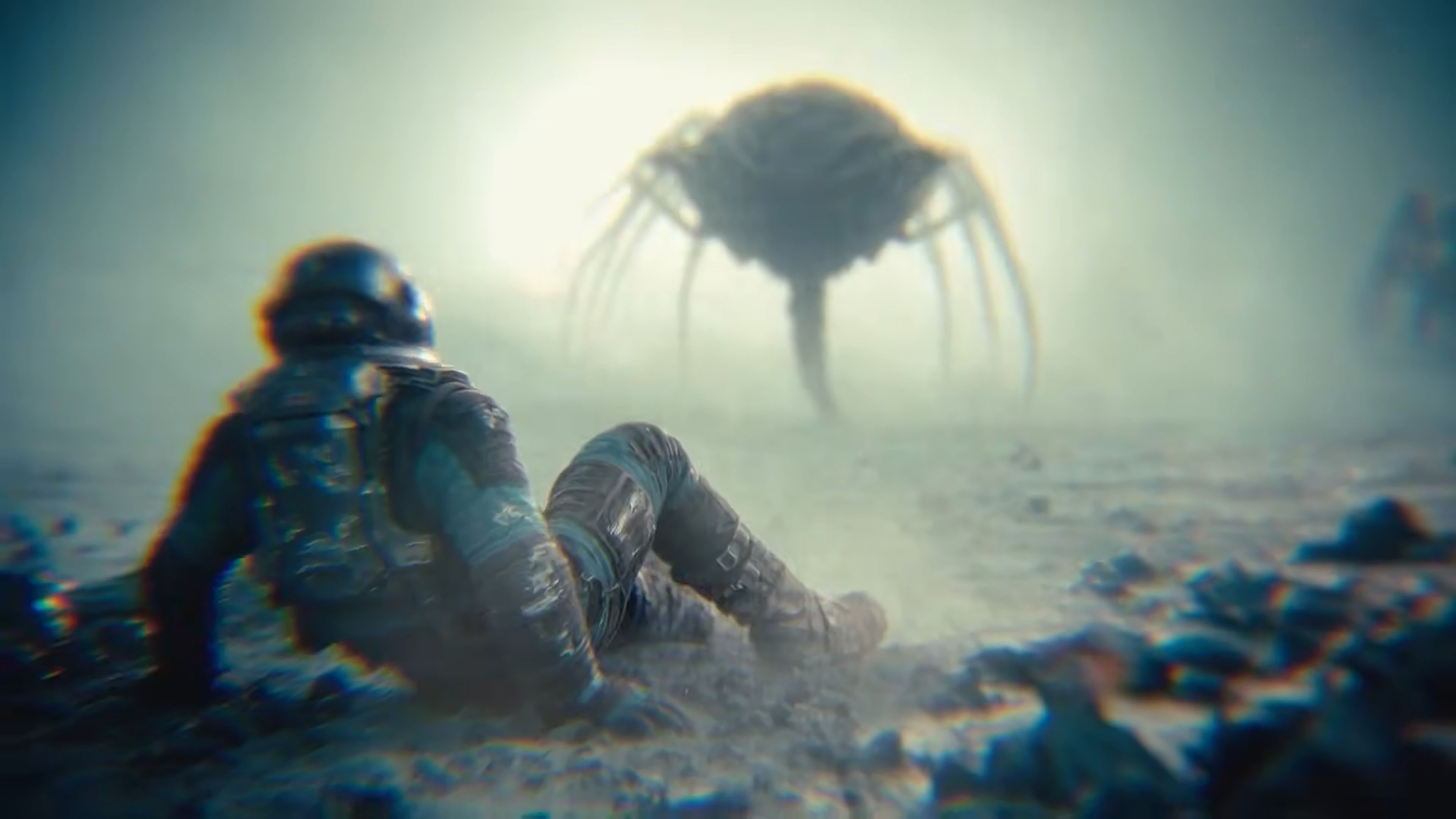
The new sci-fi project marks the start of a new "Andy Weir presents" series from Audible, with different stories curated by the bestselling Martian and Project Hail Mary author. Created by Marvel and DC Comics vet Benjamin Percy, Exoplanet revolves around three astronauts from the Wild Blue Yonder starship who find the ship torn apart by a quantum anomaly, thrusting them each onto an alien exoplanet, albeit 500 years apart from one another, putting them in a time-bending fight for survival against the unknown.
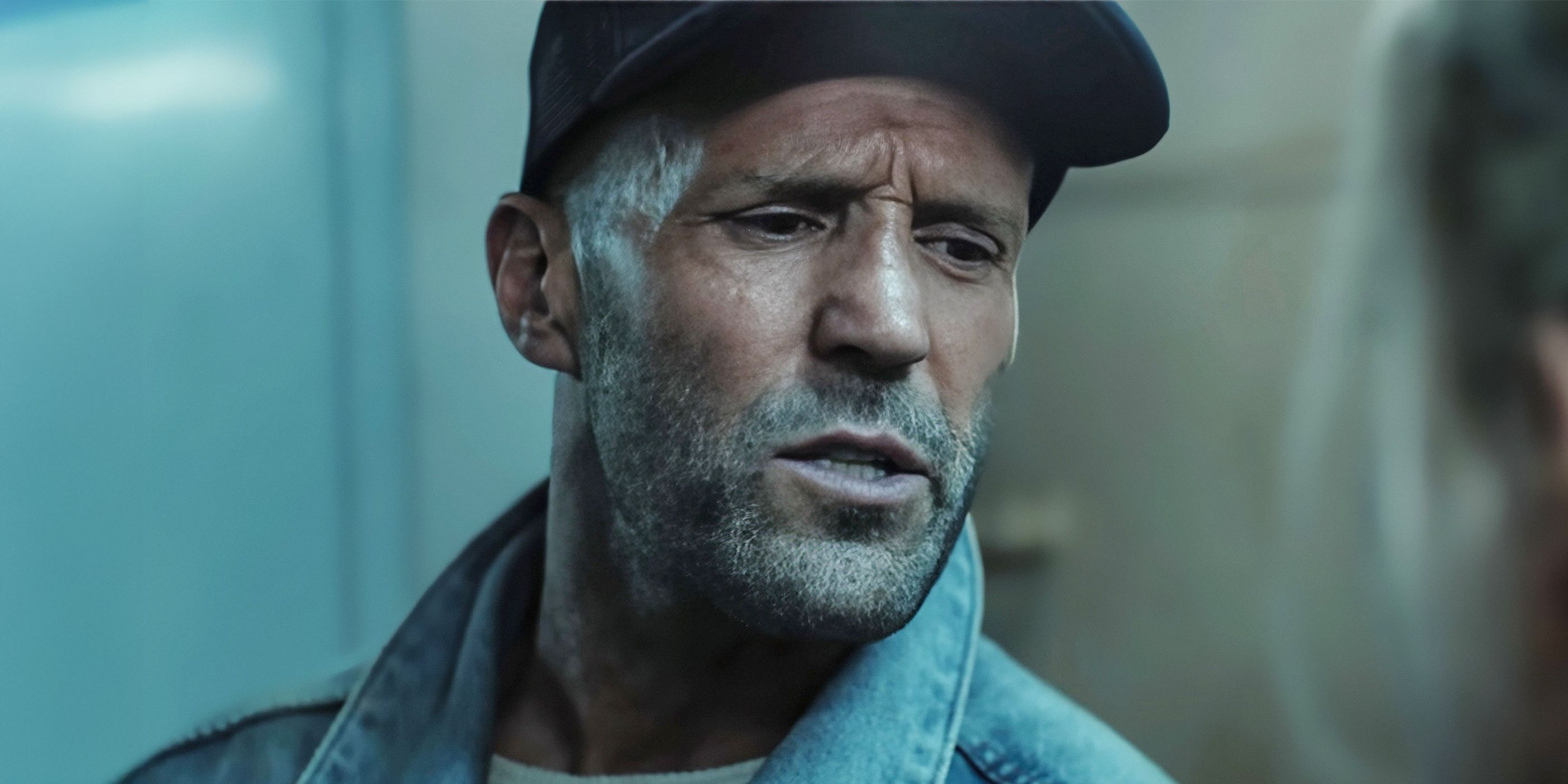
Marvel Cinematic Universe vet Anthony Mackie leads the sci-fi series' ensemble cast as Jeff Shaw, the Wild Blue Yonder's Chief Engineer striving to make it home to his daughter, alongside Oscar winner Ariana DeBose as First Officer Becca Bang and Emmy winner John Leguizamo as Science Officer Logan Bowers. The trio are also paired with AI virtual assistants in their journeys, with Shaw's being voiced by DC Extended Universe alum Ray Porter, Becca's by The Hawk's Aida Osman and Bowers' by three-time Emmy winner Cherry Jones.
Ahead of its November 5 premiere, ScreenRant's Grant Hermanns interviewed Andy Weir, Benjamin Percy, Anthony Mackie, Ariana DeBose and John Leguizamo to discuss Exoplanet. When asked about his involvement in the production and collaborating with Percy, Weir began by explaining that it was Audible who pitched him the idea of an ongoing series of curated stories presented by him, "as opposed to just waiting for me to write stuff."
The Martian author then chuckled as he described the process being great given Percy "did all the work," affirming that Exoplanet "was not co-authored by me and Ben," but instead praising the series' creator for coming up with "a fantastic" story from the get-go. Even more notable for Weir was that Audible "ran a few different things by me" to kickstart the new series, but that he "rejected all of them except for" Percy's pitch:
Andy Weir: If it's going to have my name on it, I want it to be good, and I had the luxury of not having to actually come up with the stories. I just had to look through them and find one that was good. And fortunately, Ben provided us with Exoplanet. Now, the process of working with Ben was I was, like he said, this falls somewhere between film production and book writing, so in the book world, I would be sort of an editor, and in the film world I would be a producer.
Turning to the nature of his producorial presence, Weir explained that as Percy wrote and submitted drafts for Exoplanet's seven episodes, he "was one of several people giving notes" on the material, to which Percy could then "either make the changes" or "stand firm and say, 'No, the story is supposed to do this'":
Andy Weir: It's that whole collaborative creation process that happens. But yeah, understandably, the advertising is constantly saying, "Oh, Andy Weir's new thing is out. Andy Weir's new thing is out." But, I really want to make it clear that this is Ben's thing. It's a good thing. He did a great job. But, I want him to get the credit for the writing that he did.
Percy further affirmed Weir's comments by praising his presence as a producer on the project, while also expressing that "I would never have written [Exoplanet] if not for Andy's influence," as part of the story's genesis was to think up "a cool-a-- Andy Weir story I could tell." Percy also remarked his delight at the note process with his producer, sharing that when Weir gives feedback, "he gives you an answer" on how to adjust the material accordingly:
Benjamin Percy: This goes for plot points, it goes for character notes, but it also goes for science. And in so many cases, like, "Yeah, great, that's exactly what I need to do." He's really easy to jump into the arena with. So I'm grateful.
Andy Weir: But give yourself proper credit. When I give a note, I say, "Here is one way to fix it." I don't like to complain about something unless I've got a solution. I'm like, "Here's one way to fix it."
Benjamin Percy: But it was always right!
Andy Weir: Well, oftentimes, there's a saying in the film industry, "Here's a bad idea that might lead you to the good idea." You give your idea of how to change something just to get the ball rolling.
ScreenRant: I'd love to talk a little bit about the world building, because you get so much in this short series that it makes me want more. How much of this exoplanet did you really build out in your head, lore-wise, when you were developing the series?
Benjamin Percy: The lore of the planet, the geography, maybe the mythos too, of this alien technology that is evolving over the eons, we hashed out all of that stuff in advance. There are some improvisations that, of course, occur when you're scripting. But this is a situation where I was drafting treatments, and then I was drafting summaries of every episode before I ever went to script. So, it wasn't just me, it was this whole team of people, and that's actually one of the things I want to point out that I loved about this whole process is that, as a novelist, I have a lonely, hermetic, marathonic profession. I think that when COVID hit, I really recognized that I love doing that, but I also love working with others. Whether it's comic books or screenwriting or audio, when you have a group of people who are all strenuously trying to tell the best story possible, that's inspiring. Part of that group effort went into figuring out what exactly is the mythos of Exoplanet here, 500 years in the past, in the present, and in the future.
ScreenRant: Well, I love what your team has done with that, and I'm very curious, do you have thoughts on expanding it beyond this? Because obviously, for these characters, it's a pretty well-rounded story, but this world feels so untapped with a lot of that mythos.
Benjamin Percy: I'm going to say that whenever I write a story, there's always an open door at the end, and in this case, I'd say there's an open door at the beginning, and the middle and the end, since we're fractured across so many different timelines. I think that, naturally, a story like Exoplanet, which just gives you this small speck of what's going on in the universe, could be infinitely generative, but it's to be continued.
ScreenRant: I'm really thrilled to chat with you all. I binge-listened to this entire series in one sitting, I could not stop listening. I was hooked. You all, of course, have experience in voiceover work, but when it comes to audio dramas specifically, John here is the only one who has that experience with the Batman series from a few years ago. So, with that, Ariana and Anthony, I'd love to start with you. When it comes to the world of audio dramas, in particular, versus animation voiceover, what are some of the keys for you in stepping into that booth to really immerse yourself in that world, given you're not typically provided any kind of concept art or animatics to really sort of help visualize everything?
Ariana DeBose: I kind of just go for it. I felt, especially for this process, being isolated in a booth was really helpful because it's exactly what we're doing as characters. Becca Bang is thrown 500 years in the past, so the whole point is that you're alone trying to problem-solve, and ultimately, hopefully, save humanity. But I just sort of went for it, and it really required me to use every possible bit of my imagination that I could muster, which was a great challenge for me. And also, your girl was vocally tired after these sessions. [Chuckles] I was like, "Whoa, whoa!" I think there's a real kind of misunderstanding, potentially, or at least for me, I didn't fully realize just how much of my physical vessel my voice as a tool this was gonna take. Like, I knew it, but then you get into it, and you're doing it, and you give yourself to it, honey, I was sweating. I was sweating in that booth. This was a full-body experience.
Anthony Mackie: I had done an audiobook before with Krysten Ritter called The Hunting Game, and every time I do one of these, or any kind of voiceover, pretty much my entire career has been trying to take back what Morgan Freeman has taken from me. Ever since he did Unforgiven and stole the role from me there, I said it'll never happen again. Because that was supposed to be me and Clint. It was a lengthy audition process. Morgan wanted out. It jump started his career and it f---ing ruined mine. [Laughs] The big downfall is you try to do what Morgan Freeman would do, and then you just end up flat and neutral. So direction is very important, dude, because I think I'm giving colors, I'm giving flavor, I'm giving drama. I'm giving depth. When in actuality, when I listen back to it, it just sounds like I'm reading something off of toilet paper. So, the direction is always important for me. I love doing the voiceovers. I love being able to give my voice to where someone else can listen to it, and experience the opportunity and visually create for themselves what's going on around them, and that's why I love doing these projects so much.
ScreenRant: So, John, to turn to you, I mean, again, you did the Batman series. You're no stranger to animation. I'd love to hear, what are some of the keystones for you, regardless of animation or audio drama, when you step into that booth to really bring these worlds to life?
John Leguizamo: Well, I'm an entertainment geek and nerd. So, when I was young and broke — and old, because back then we didn't have YouTube, which is an incredible research tool — I used to go to the Broadcast Museum in Manhattan and watch all these old radio plays and listen to radio plays. I fell in love with voice acting. I thought it was such an incredible thing that you forced the audience to use their imagination to picture everything, and you had to use your voice to help them see these things, to help them see what the actions were, to help them understand the intensity of what you're going through. So, I try to use the voice to do all that, but at the same time, you still gotta act. You still gotta be in these places emotionally and physically. If I do what I do, whether it's Sid the Sloth, or Encanto's Bruno, if I'm running, I'm running in place. If I'm being hit, I start punching myself. I know it's a little method-y, but that's how I've been trained.
Ariana DeBose: That's what I meant by full body! Exactly what you said.
John Leguizamo: You got to do what the character's doing, otherwise, the voice doesn't have all those nuances. You got to be going through it.
ScreenRant: So, Ariana, I'd love to turn to you next, because Becca gave me great Vasquez vibes from Aliens back in the day. She's that sort of tough, competent crew member. But then, there is something of a soft spot underneath the surface. I'd love to hear about going into the writing, working with the director to really figure out who Becca is and what she was going to sound like in this series.
Ariana DeBose: Yeah, you kind of hit the nail on the head. Stephen Winter was very, very important for me, because I was sort of like, "She could sound a lot of different ways," but her baseline sat in a vocal fry. Which was very challenging for me, because I don't normally sit in a vocal fry. But all of those attributes you describe are what I love. She was competent, confident, but also sometimes a little overconfident. There are some things you just can't prepare for, and she definitely experiences that in her journey. But she's a softy, and I like a complicated lady. Most ladies are complicated, and this was no different. So, we had a really great time playing. It was a lot of play, and she didn't land for probably like the first hour. I started getting very stressed, but eventually we got there, and I'm very proud of who she is and how she relates to her cohorts.
ScreenRant: Anthony, I'll turn to you next because, not to shade Bowers, not to shade Becca, but I feel like Shaw's drive to get back home to his family really is the most sort of relatable and grounding of the trio here in this story. I'd love to hear what it was like, again, working with Stephen Winter to really find those vulnerable moments while still not overselling the drama of Shaw's family life, of still letting him have that push to also want to save his crewmates and save the entirety of humanity?
Anthony Mackie: Well, I think one of the big things we talked about was the then, the there, and the now, and being in three different realms of time, and Shaw being in the present. There was something very interesting about the possibility of being able to make it home, and being a dad who hates cats. [Chuckles] There was no opportunity to exist in the idea of not making it home. It was very important. I told my daughter I would get back to her. I always kept my promise to her, so it was very important for Jeff to get back home. And that was his drive, that was his fuel. That's what kept him going. So, the desperation and the idea of hope of trying to get back home to the daughter really pushed the storyline, and pushed him forward, and gave him an urgency that I felt helped this character a lot. Especially with listening as opposed to trying to do it on camera and overacting. I think that helped with this story, and with this character, and with this time, to be able to push him forward and keep him energized. Because when you're listening to a ball rolling down the hill, or a train moving on the tracks, it's that throughline, that locomotive that keeps it interesting. What's going to happen next? So, Jeff, in that same regard, was really fun to be able to go as quickly, as fast and as urgently as he could to push the story forward.
ScreenRant: And then John, I'll turn to you next, because Bowers, in trying to visualize and understand this futuristic world that he's in, felt like it gave you some of the most complicated sci-fi dialogue of this entire production. I would love to hear from you about finding a way to authentically portray all of that, but also authentically portray his urgency to figure out where he is and how to get back to his team.
John Leguizamo: Yeah, it was mad tricky to try to get all that dialogue and make it sound like it's how I normally talk. That was a challenge, but like everybody's saying, Stephen Winter was such a great director. He really gave you the space and time. I'm a little OCD, so I'll do things over and over and over 1,000 times, even though your throat will be killer at the end of the day. It's so interesting. Also, doing the whole body experience to act it, but also, as Anthony was saying, find that place to sit back a little bit, to not overdo it. We welcome the audience, bring the audience to it. So, it's a tricky place that you have to find. And with Logan Bowers being the science officer, I just had to practice it a lot to make it sound like it was real dialogue, and then put emotion behind it. Obviously, I'm a method actor, so I just start thinking about whatever relates to me, my life, my kids, my family. Times of desperation are not too hard to imagine, because of the times we're living in, and things that are happening to Latin people in this country. So there's plenty for me to draw on.
Exoplanet is now available to stream on Audible!
When the starship Wild Blue Yonder is torn apart by a quantum anomaly, its surviving crew members crash onto the same alien world in different eras and must collaborate across time and space to survive.